September Rate Hike In Jeopardy (Sarcasm)

It looks as if the chances of a decent Jobs number on Friday just went down. A host of negative US economic data came out today and not much of it is pretty.

Construction spending fell for the first time since the crisis.

20160901_const

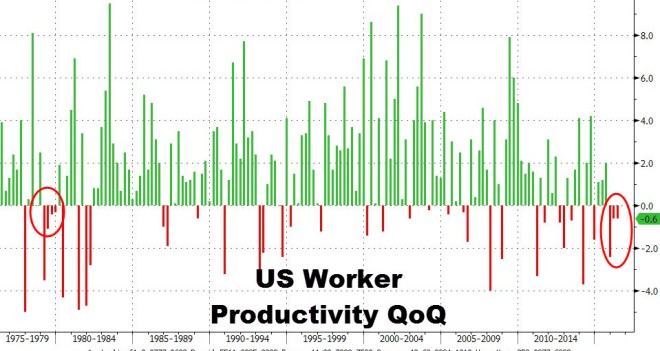
US worker productivity continued to decline.

20160901_prod

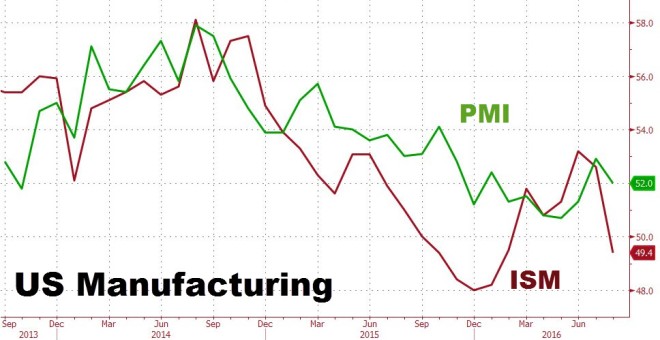
ISM fell back into contraction territory.

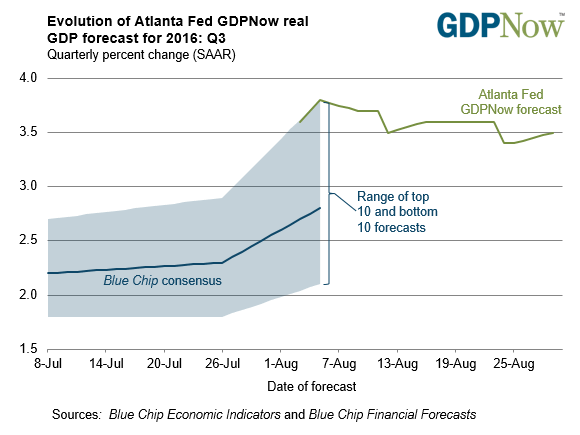
Apparently the US election is starting to show up in the US economic data. Businesses are pulling back in the uncertain environment. But that still doesn’t stop the Atlanta Fed from predicting US GDP growth in excess of 3%. I expect this number to come down by quite a bit. Remember at one point in time, the Atlanta Fed had predicted 2.8% GDP growth for Q2 2016 before revising it down to 1.1%.

gdpnow-forecast-evolution

Needless to say, the Fed won’t have trouble coming up with an excuse not to hike interest rates this month. The fact that August is normally a weak month for job growth as well, only increases the odds that the NFP number will be underwhelming, thereby allowing the Fed to back out of its recent calls to action.

https://twitter.com/edwardnh/status/771362361697570816

I tend to agree with Mr. Harrison. I don’t think the Fed will seriously consider hiking unless the number is +300k. The market has different standards and will most likely interpret any number above 180k as a positive for a potential rate hike. But once again I must stress, in lieu of recent economic data, the odds of the number being in excess of 180k have fallen.

The recent move in dollar strength/yen weakness may be ending sooner than I originally thought. But that’s not all. US equity volatility is once again on the rise. After an incredibly quiet summer, traders are coming back to their desks and staring at a Fed that wants to hike, slowing economic data, and a very uncertain US election. Strap in, things are about to get interesting!


A Wild Trade Appears: Central Banking Mistakes Are Super Effective

Oh look, the Fed is back again talking up a rate hike. Man did they come out swinging this past week. Once again they are forcing the market  price in a rate hike.

Has the US economy turned a corner? No. Have they hit their inflation target? No. Was Yen strength causing problems? Yes. Was the SPY above 2000? Yes. Do I think the Fed is going to hike in September? No, but the September rate hike’s life depends on a lagging indicator which could make for an interesting trade.

The August NFP jobs number is supposed to come in around 220,000 this Friday. I think that if the number is 180,000+ which seems likely, the market will price in a Fed rate hike much higher than the current 33% chance right now.

That means the dollar will get stronger and US equities should fall. I hesitate to say which direction treasuries would go because any Fed tightening would be bullish for the long end of the treasury curve. The Yen could also weaken initially which would boost the Nikkei.

At the same time, I do not believe the Fed will in the end hike interest rates. For a few reasons. One reason, China cannot handle a rate hike. The PBOC does not want to inject more liquidity into the banking system which would weaken the Yuan.

“A cut to lenders’ reserve requirements would add too much liquidity to the financial system and lead to yuan depreciation expectations, China’s central bank said late Friday.”

If the the Fed hikes interest rates, liquidity would be pulled out of the Chinese economy. The PBOC then would be forced to do what it does not want to do and inject more liquidity via a rate cut to the RRR.

Also, this Fed is incredibly political. There’s a clear favoritism towards Hilary. Donald Trump has publicly said he would replace Yellen if elected. The point is, the Fed will not hike interest rates and risk Trump getting elected… UNLESS Hilary is a virtual lock to win the nomination. Do I think Hillary will be a lock to win the Nomination come September 20th? No.

Recently members of the Fed have discussed the possibility of raising the inflation target as well. Meaning, the Fed is looking for excuses to not hike interest rates. They know the data that they target ie. Jobs, Inflation, GDP growth will tell the market they should hike, but they are constantly looking for reasons to stay put.

Time and time again Yellen has proven to be timid and I think the September meeting will be no different.I do not claim to know the excuse the Fed will come up with this time, but they will find something.

Once the Fed backs off the dollar will fall, the Yen will rise, and the Nikkei will go back into crash mode. If the Fed does hike the Nikkei will also go into crash mode. Either way I think after the market prices in a rate hike over the next two weeks, shorting the Nikkei and being long Yen will be a good trade.

In the end, the Fed’s desperate attempts to force the market to price in a September rate hike could lead to predictable volatility in various asset classes that should be trade-able.


The Bull Case Revisited

bull-bear1_hor_61d10d00-a594-11e3-acd4005056a302e6

In this day and age of record low interest rates and record high asset prices it is hard enough to find a human being who is both rational and intelligent, let alone one that likes Hollywood’s sequel and reboot craze. With that said, serialized story telling when done right is incredibly rewarding as it gives us as viewers a chance to go deeper and further into the psyche of the characters we love.

Where am I going with this you might ask?

In the investment world, no one is an expert on everything. You constantly rely on the opinion of “experts” to form an opinion on a wide range of topics from China’s economic policy to the physics of lithium ion batteries.

At first glance, the major concern anyone has with an expert is are they right? In a bull market, it’s easy to look smart. Just look at all those “experts” on CNBC. What I find more important than being right, is how an expert processes new information and incorporates that into his or her opinion.

It’s this vital step, that is most often overlooked, ignored all together and what brings me to writing this very post today.

I have decided to write a sequel to my massively popular and successful summer blockbuster “Bulls On A Tightrope“. In it, I analysed a possible scenario that could negatively impact my bearish portfolio. Given that I am net short US equities and long US treasuries both of which are near all time highs, I thought now would be a great time to revisit the Bull Case.

I believe that the world economy could stabilize if the following conditions are met:

  1. The Yen and Euro weaken against the dollar.
  2. The dollar weakens against commodities and EM currencies.
  3. Emerging markets rebound accelerates into sustainable growth.
  4. The US economy stabilizes on the back of a weaker dollar.
  5. China continues to delay any real adjustment.

1) The Yen and Euro weaken against the dollar.

It’s safe to say, neither have happened. Back on May 14th, when I wrote the article USDJPY was at 108, and EURUSD was at 1.13. As of writing the sequel, USDJPY is at 100.72 and EURUSD hovering around 1.125.

Both are interesting stories in their own right. The Euro is trading quite strong against the dollar. Is this due to dollar weakness or Euro strength? The equity on Europe’s banks trades like it needs a bailout. Yet the Euro currency does not. Is this because the market believes there will be a successful bail in without causing systemic problems?

Or is the dollar really that weak? A few years ago, the Fed loved to talk about “escape velocity”, like they were on par with the scientists and engineers that launched men and women into space. Remember that? I’m sure central bankers don’t want you to. US GDP growth for the first half of 2016 was a pathetic 1%.

The US economy is not stabilizing on the back of a weaker dollar. It’s slowing down. Now that doesn’t stop the Atlanta Fed to predict a ridiculous Q3 GDP growth rate of 3.6%.

But it seems to me that we are finally witnessing the market price in the reality that escape velocity was a fairy tale. As such, I expect the dollar to head down over the next month or two which should be positive for commodities, inflation and EM.

Any potential upside in this downward move in the dollar should be limited by the negative effects of a weaker dollar because the dollar is the quintessential tightrope that our policy makers are forced to walk. If the dollar weakens too much, Japan and Europe run into trouble. If it strengthens too much China throws a fit and sends the world some nasty deflationary pulses.

Of the three, only China has proven effective in weakening its own currency. This is where it gets interesting, because if Japan cannot weaken the Yen, the Fed may be forced to strengthen the dollar to counteract any Yen strength.

This is why Dudley talked up a September rate hike just hours after  USDJPY dipped below 100 on Monday. He bought some time, but not much. This isn’t 2012 anymore. Words are not enough to save the markets.


The possibility of a Fed rate hike going into a tumultuous US election with a slowing US economy is not something I want to be bullish on.

Throw in China’s continued slow down and it becomes incredibly difficult to be bullish on risk assets for the remainder of the year.

Stimulus in China is loosing its effectiveness at an alarming rate. M1 is exploding past M2.

M1

Which has put increasing pressure on China’s FX reserves.

https://twitter.com/WorthWray/status/763008798734688256

This money growth isn’t showing up in the real economy as private fixed asset investment plummets.

FAI

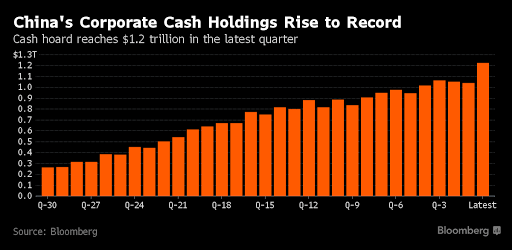
Which is certainly not due to a lack of available money. China’s corporate cash holdings are at record highs.

Cash

If China wants to make it to the People’s Congress next autumn, it will need a bigger stimulus package.

bigger-boat

Thus capital flight out of china China should re-accelerate, pushing the RMB lower. China the world’s 2nd largest economy can ill-afford a Fed rate hike.

In essence, things look pretty grim for Japan. The domestic options for weakening the Yen in a sustained an controllable manner seem non existent right now. Without external help the Yen will continue to strengthen which will increase the stress on Japan’s fragile economic and further accelerate capital flows into Japan.

20160817_japan

From zerohedge: “The biggest driver of the collapse of Japanese trade was a 44% crash in the Chinese trade balance.” Which brings me to an important but often overlooked cross rate – CNYJPY.

CNYJPY

Having retraced over 60% of its 2012 up move, this trend is strong to the downside. With China forced to weaken its currency while Japan’s strengthens, I see no reason for this to change… UNLESS

The BOJ commits a major policy error. The probability of such an event is certainly on the rise. The central planners who have micromanaged their economy to a “t” are not going to sit idle as their economy implodes. They will break the market if they have to, because only then will they stop.

Negatives rates clearly haven’t had the desired effect in Japan. The Yen has considerably strengthened against the dollar since the BOJ implemented NIRP on January 29th of this year.

What if the BOJ beats the Fed to the next rate hike? No asset in the world has priced in such an event. I’m not saying they will do it, but what other options do they have? They will be compelled to try something.

Can they buy more bonds here? Not really. They are also running out of Japanese companies to buy. According to Bloomberg, the BOJ will become the top shareholder in 55 companies by the end of 2017. Fiscal stimulus was a dud. Maybe they can print yen, buy dollars and reignite the global currency war. 

This is where I begin to worry about my position in US treasuries, which looks terrible from a risk reward perspective. I knowingly invested in a bubble and have now decided to exit.

Central banks are fast approaching their limits which will bring into question the logic of buying negative yielding paper. Throw in the fact that the momentum leading this bubble has started to fade. The following chart from Jesse Felder shows how over extended US treasuries are.

sc-2

I’m not saying this it the low in US bond yields, but for now I don’t see a reason to own them. US treasuries have been tracking gold quite well this year. Which leads me to believe that the search for yield has been a significant contributor to the appreciation in gold.

What happens in a rate rising environment where yields rise, even if temporary. Gold from that perspective could take a hit. Gold could even fall in a rising inflationary environment (remember 2013).

The possibility of shorting bonds to hedge my gold position looks to be an interesting option. I’m not sure I’m there yet and instead would rather focus on US equity volatility or the lack there of.


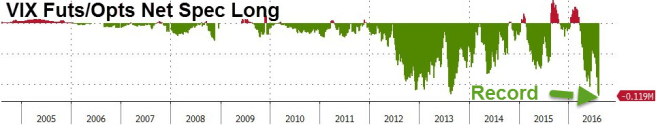
Well this is odd. The S&P 500 broke out of a 19 month trading range that suggests a much bigger move is coming and yet volatility is incredibly low due to a record short speculative position.

VIX

At the same time investors hold a record long position in call options.

20160818_open

I’ve been a bear on US equities for a while now, and it’s hard to find a better time to go short than right now. From a technical, global macro, and sentiment perspective, this looks like a great opportunity to short. It’s times like now to add on.

So that’s it for now. I wandered quite a bit, but I think I covered the old bull case. Now I must find a new one to better hedge my portfolio. There certainly are interesting options as it would be nice to have a better short term inflation hedge than gold which has been behaving more like a bond. I remain intrigued by the possibility of shorting bonds, or perhaps purchasing more oil exposure as a hedge for a falling dollar which pushes up inflation.


The Hidden War

base_image

The two most powerful forces on earth are locked in an epic struggle, the outcome of which will determine the fate of mankind. It’s human stupidity versus human ingenuity, and the stakes have never been higher.

What reads like a log line for a Hollywood blockbuster film is actually the current state of the world. Governments, corporations, private citizens and everyone and everything in between has borrowed more than they can ever hope to pay back with current technology.

This is nothing new. We borrow money under the belief that we will be more productive with it than the rate of interest we pay on said debt. Unfortunately, that’s not the case right now as US productivity growth has been on its longest losing streak since 1979.

Although real interest rates are negative in the US, so is it that surprising that productivity is also negative?

When you consider that this US economic expansion which is nearing the end of its cycle has operated on zero interest rates the whole time it is even less surprising that investments don’t offer the same returns they once did.

There’s a running joke that the only way we get out of this mess is for someone to invent cold fusion (unlimited free energy). Now that would certainly do the trick, but there are a surprising number of game changing inventions just over the horizon that will change our lives beyond comprehension. Graphene, big data, artificial intelligence, driver-less cars that run on electrons, epigenetics, the list goes on and on.

The question as always comes down to timing. Can technology and innovation deliver us from myopic central banking policy? Over the short term, I have serious doubts. Most of these technologies are years away from significantly impacting our lives meanwhile global credit conditions continue to deteriorate at an alarming rate.

It’s important to highlight this hidden war, because it underscores the vital importance of science and technology in not just forwarding human progress but maintaining social stability and global peace. It is my hope that the future will be determined by those who unshackle us from our past mistakes and not those who bind us with misguided policies.


The Bond Plateau

plateau

Can you feel it? There’s been an awakening. A shift in the world of investing that will bring about unforeseen change. A dusty cobweb covered switch in some far off corner of the investor’s brain was finally flipped on.

At the start of the year, Goldman Sachs and most other big firms were predicting US interest rates to rise. Now no one is. It has reached the point that investors aren’t even willing to sell their bonds to a price insensitive buyer such as the BOE. From zerohedge:

“Longer-dated bonds are “an area where people are hunting down what yield is left – you have to extend out into that area to get anything really,” Aberdeen’s Hickmore said. Carney “is going to say ‘it’s very early days, this is day one of the long-end purchasing.”

Investors chief concern these days is “what if interest rates never rise”. That’s right, bonds have reached a permanently high plateau. Of course we only need to look back a few decades to know this doesn’t hold.

With that said, I think a congratulations is in order for our unbelievable central bankers. Like Arnold Schwarzenegger covering himself with mud to hide his body heat from The Predator, the central bankers have blinded investors to risk.

schwarzy-coperto-di-fango


This potentially final embrace of central banking policy comes at the very heels of a growing movement of people (myself included) who doubt the efficacy of central banking policy. After the Japanese implemented negative interest rates, it seemed the market was finally fighting back. However as Morpheus notes…

22d


But perhaps people should not mistake a battle for the war. Investors have proven quite capable of buying anything with a yield as long as there is no perceived risk. The funny thing about risk is that you don’t know you have it till it happens.

global_defaults_hit_the_century_mark-column_chart-ft-web-themelarge-600x397

Wouldn’t you know? Global defaults in 2016 have already reached its second highest level in the last 12 years. Delinquencies on commercial and industrial loans is also spiking to crisis levels. Is now really the time to blindly plunge into corporate credit?

fredgraph1

Of course this perceived lack of risk is a fallacy, and the question then becomes, when does risk actually matter? Which brings me back to the irony of this potentially final embrace of central banking policy. Pension funds have piled on the risk to maintain their mandated returns.p1-bx524_penris_9u_20160531120608

It’s important to note that I have no idea when this will end. The nature of irrational behavior is that it is fickle and unpredictable. The end result may be obvious but our journey there is anything but.

But every crisis is an opportunity and as long as investors are blind to risk and desperate for yields some pretty interesting investments that I already own become that much more desirable – energy storage and solar and wind power. These three technologies allow investors to not only get a positive yield, but with very low risk.

If you live in an area like Arizona or Texas or California where the electricity rates vary tremendously by the hour, you can charge up a battery during off hours and use that energy during peak hours.

Depending on your location an investment in a energy storage will save you at least 7% of your investment per year in electricity costs. Over the longer term increased battery storage capacity would obviously narrow the gap between off and peak electricity rates but that added benefit is beyond the time horizon of this post.

Demand for wind and solar is absolutely exploding right now.  Just 3 years ago, the US installed its 10th GW of solar power, and now the US has 10 GW of utility-scale PV projects under construction.

And as the technology improves, so too does the yield. I’ve already discussed how the costs of solar panels is set to fall. Solar panels and wind turbines are also becoming more efficient. Set against the back drop of falling sovereign bond yields, the rising yields on these technologies and their supply chains look even more attractive.

I briefly diverged away from the consequences of this “bond plateau” but rest assured there will be many more, most unforeseen. Whether that means green technology or Irish REITs or some other exotic asset, there will be other ways to profit from this irrational behavior.

It’s important to remember that irrational behavior is also incredibly volatile, and yet US equity volatility is near record lows. The risk reward on that trade looks spectacular.

Alas the purpose of this post was to bring to your attention the mindset that plagues investors today and adjust accordingly.


Live By The Yen Die By The Yen


haruhiko-kuroda-boj-japan-interest-rates

For market participants hoping for well coordinated intervention by central planners, 2016 has been a disappointing year. It’s also been an incredibly frustrating year for my sanity.

Whether it’s the back and forth flip flopping Fed, or the Japanese central planners who promise the moon and deliver next to nothing, I’m starting to wonder how much longer the markets are willing to tolerate this incessant teasing by central planners.

Recall that back in January, when the BOJ unleashed NIRP, the market’s immediate reaction was pure fear and the Yen actually rallied sharply. So it’s important to analyze the market’s reaction to any further shenanigans from the Keynesian Nirvana seekers also known as the Japanese central planners.


The best case one hears today is that “they’ll manage it”. Meanwhile, the Yen has whipsawed about more than a Michael Bay action film as the Japanese Government rushed together another stimulus package, this one according to Abe is over 28T Yen.

Size does matter, but it’s also a matter of how you use it. And only 1/4 of the package will go to actual spending over the course of a few years. Sure the deficit that has been negative for over 2 decades will expand, but it will not expand far enough to match the ridiculous 80 Trillion Yen/year bond buying program the BOJ has had in place for over a year now.

1x-11

Once again it all comes back to the simple problem of supply and demand. The bank of Japan’s limitless demand is running into the problem of a limited supply of bonds. Back in May I wrote:

Thus the amount of JGBs truly available for purchase are smaller than people realize, which magnifies the BOJs current conundrum: Where are they going to find the bonds?

The answer is the Japanese government should issue a poop ton of debt by expanding the deficit even further with the BOJ monetizing every last bit. Unfortunately with Japanese government debt to GDP at +220%, it seems silly to think that the answer to Japan’s problems are for the government to issue even more debt.

With such a high debt level and such a large balance sheet, both the government and the central bank respectively have become limited in what they can do without creating doubt in their abilities to control the situation.


The BOJ is aware of the perception that it may be reaching its limits, which may be why the Japanese Government “reached” for the reins.

It is now apparent that the Japanese government was trying to force the Yen lower through a meaningless gesture of a weak stimulus package which has underwhelmed market expectations. The response was quite expected – a rallying Yen crushing the hopes of Japanese central planners.

How long before they are forced into Helicopter money remains to be seen, but according to Abe’s bleak opinion we may not be far off. From the May G7 summit,

“The global economic outlook is as grim as it was after the Lehman Brothers crisis in 2008, Shinzo Abe claimed on Thursday, as the Group of 7 revealed its stark divisions on economic policy.”

That’s a bold statement, to essentially say the world is on the edge of financial collapse. It’s arguably even bolder to not deliver on a significant stimulus package when one believes the risks are that large.

His fear is obvious, whether he is right or not remains to be seen. In the meantime we can all watch together as the strong Yen continues to undo all of Abe’s and Kuroda’s hard work.

Financial markets, especially these days, seem to be all about perception. Fortunately, not all countries are bound by the same perception that has shackled the Japanese central planners.

Take China for instance, where in the first quarter of this year the central planners launched a stimulus package of 10% of GDP over the course of just 4 weeks. Japan can’t even do a 5% stimulus package spread over a few years without drawing negative attention!

China of course, is the country that while simultaneously suffering capital flight has also experienced one of the fastest growing and largest debt bubbles in history over these past few years, and yet they can get away with massive stimulus packages. I can only imagine Abe’s outrage to such a ridiculous double standard.

Which brings me to the CNYJPY, an important but virtually unnoticed cross rate. The Yuan has been falling against the dollar these past few years, while the Yen has been rallying against the dollar which has led to very impressive decline in CNYJPY. So much so that the 50% fib retracement level off the 2012 low is now resistance going forward. ‘

Given the current pressures facing both currencies it seems hard to believe that this current downtrend will reverse. If CNYJPY crosses the 61.8% level, we should expect more risk off and deflationary pressures going forward.

It’s hard to see any of these events as bullish. And when you throw in the 1.2% US Q2 GDP growth, it makes me want to reach for the “fire everything button.” Instead, I will use this time to build my short position further via the purchase of +2 year duration puts on the S&P500.

-KC


So You Think You Can Hike

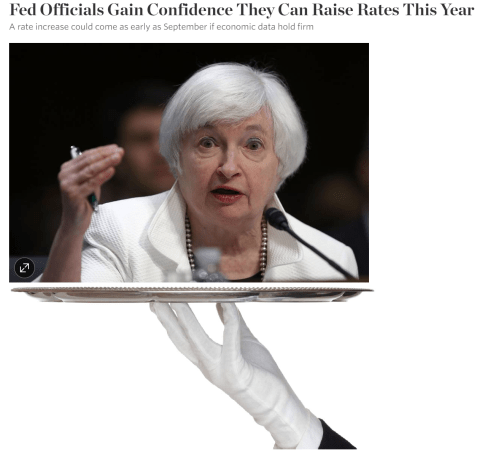
Sometimes it can be difficult deciding what to write, and other times the Fed hands you your next post on a silver platter.

Headline

Thank you WSJ.

Emboldened by the recent quarter of decent GDP growth, falling unemployment, rising inflation and above all else a soaring S&P 500, the Fed says its ready to hike… just not right now.

“Officials are almost certain to leave rates unchanged when they meet July 26-27, according to their public comments and interviews with officials.”

I’ve already said my piece on the importance of a Fed rate hike for the July meeting.  I believe it is their last chance to hike.

If they truly want to hike, waiting is a massive miscalculation. The data will not be this supportive again.

A large portion of this stock market rally can be attributed to talks of helicopter money arriving in Japan. The Yen has sold off, US credit spreads have fallen, and the market has convinced itself that everything is fine.

Except everything is not fine, just look at the US’s umbilically tied partner in crime – China.

China FAI

At this rate, private FAI could be negative by as soon as July, although I have my doubts we’ll ever “see” a negative number. But according to Worth Wray, that’s not even the worst part.

https://twitter.com/WorthWray/status/754713697788960768

We are witnessing what happens when the central authority begins to lose control. Much like the US in 2008, the Fed cut rates to zero and still the economy collapsed. During the expansionary phase of a credit cycle the central planners have a lot of control, but it becomes incredibly difficult to stop gravity once it has taken hold.

This also comes at a time when China’s house price inflation appears to have peaked for this cycle. The tier-1 cities have certainly rolled over.

Meanwhile the dollar is rising off its bottom from early may.

https://twitter.com/OrangeTrader/status/755525800686981121

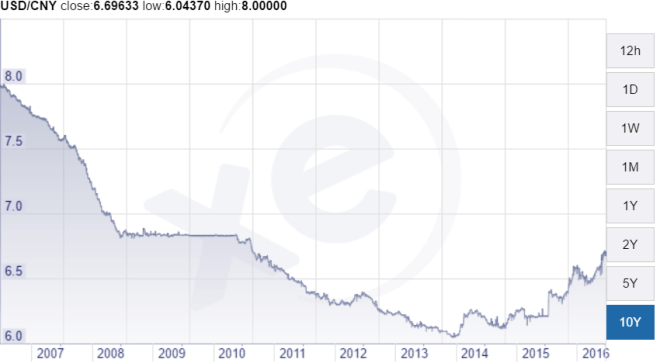
Any further strength in the US economy could accelerate the dollar’s rise and put further pressure on the Yuan which hit a 6 year low against the dollar yesterday morning.

USDCNY

All of this comes at a time that China’s corporate bond market is starting to freeze up. This comes after making a 9 year low in January.

China Bond Spreads

Defaults in China are rising quite rapidly. Halfway through the year and we’ve surpassed the previous two years of defaults combined.

These defaults come at a time when short term financing via Wealth Management Products (WMPs) has absolutely exploded. According to Bloomberg:

“In 2015, China’s financial firms raised 158.4 trillion yuan ($24 trillion) — equal to about 230% of GDP — by issuing wealth-management products (WMPs). The amount of WMPs outstanding at the end of the year was 23.5 trillion yuan. The gap between those numbers reflects the fact that most products have a maturity of a few months so funds are rolled over, perhaps several times, over the course of the year.”

China’s financial firms cannot afford a panic in the bond market. They’ve become too dependent on WMPs at a time when bond defaults are rising, and the private sector is losing faith in the economy.

It won’t take a large hiccup to upset this fragile apple cart which makes it difficult to say how long this can truly last. Using 2008 as an analogue, subprime borrowers were defaulting on their first payments back in the spring of 2007 but it wasn’t till the fall of 2008 that the economy truly started to implode.

To wrap up, the financial plumbing of China is under tremendous stress. Any Fed tightening or dollar strength will exacerbate said stress. So the Fed can talk about hiking, which will push the dollar higher, but they cannot actually hike, because they risk setting off the Chinese debt bomb.

US risk assets can and have certainly headed higher on the hopes of a stronger US economy, which is why I recommended back in May buying S&P500 calls above the all time high, because as I put it:

“Firstly, I would like to reiterate the great risk reward opportunity S&P call options provide over the near term. No one thinks we will hit new highs on S&P which makes call options above that level so cheap and a great way to hedge this bullish scenario.”

And maybe I’m wrong, maybe low oil prices combined with a healthier oil sector (now that we’ve had a bunch of defaults) will push the US economy into a higher gear by the end of this year. With the rest of the world struggling to grow, it’s difficult to imagine the dollar not breaking out of its 18 month trading range and we know what that means for risk assets.

So best of luck to our Fed officials. It certainly looks like they will need it.


When Micro Met Macro

harrysallycover2

It was a hot summer day. The Global Warming Gods had been working their magic on the north shore of Long Island. The dying summer breeze left the air thick and hot. It smothered young Maggie the black haired mutt, who lays trapped on the floor.

Meanwhile, the Klendathu Capitalist, had fared no better. He struggled to maintain his focus. His long blonde hair was thick with sweat. The information was starting to blur in his mind. The chart on his computer was inseparable from the last few.

I need a break, he thought.

As he was getting up he looked back at the previous few charts and it hit him. They were all the same chart… except they were different.

What follows is the story of When Micro Met Macro:

This slideshow requires JavaScript.

Four separate sectors: Lithium, Fertilizer, Iron Ore, and Solar Grade Silicon, with four very similar cost curves. Notice the location of where Chinese companies fall on the scale – the high cost end.

Chinese companies are inefficient. This is not news. China’s zombie companies are a well known problem. They were profitable during booming demand times when prices were higher and most importantly when wages were lower.

Since 2000 wages have more than tripled, which has put considerable pressure on Chinese company margins.

China Wages

Simultaneously, the Chinese Yuan has been rising in value over the last 16 years, which has further hurt Chinese company competitiveness.

USDCNY

I am willing to bet that China’s zombie company problems extend far beyond these four sectors, but the issue is the same – the costs are too high.

There are many ways to skin a cat, just like there are many paths to discovery. The Chinese Yuan Devaluation is no different, and this is just another way of arriving at the same conclusion.

Unless prices dramatically rise into an oversupplied market (unlikely), the CCP will be forced to let the Yuan fall a significant amount. This will reduce the cost of labor, and the debts these Chinese companies hold. With a weaker Yuan, China will save some zombie companies and even some of the healthier companies that have struggled to survive in such a harsh environment.

The point I’m making is that from this perspective a Yuan devaluation makes sense. And we know what a deflationary event like a Yuan devaluation means for global risk assets. It’s not hard to position for this outcome. Buy treasuries, gold and short risk assets.

It’s the other side of the trade that isn’t as easy to hedge. What happens if the CCP doesn’t devalue the Yuan and can successfully delay the inevitable for another few years?

I’m quite skeptical of China’s ability to keep the game going for another year, but say I am wrong. Say China keeps the credit pumps flowing into these companies for two, three even five years without losing control.

In that case, I want to be in the strongest growing sectors of the global economy. If nothing bad happens, I want to be in the sectors or plays that will explode.

And that something as I mentioned in a previous post is the coming energy revolutionAlthough the time horizons do not perfectly mesh, rarely do I find a way to hedge my global macro thesis with long term technological trends.

Unless prices rise, these Chinese zombie companies will go out of business. And even if prices do rise, they would have to rise considerably higher into an oversupplied market, which is hard to do.

Even if price does rise it will likely not be sufficient to save the inefficient debt heavy Chinese companies. For reference look at oil and gas companies which are on the verge of bankruptcy even after the price of oil almost doubled.

Thus if prices remain the same or fall, production/supply will be cut. In the important energy markets, rising demand coupled with falling supply will create a sharp turn around in price. The old adage “the cure for low prices is low prices” holds again.

Seems obvious, and maybe it is, but you also have to pick the right sector. Which brings me to Solar Grade silicon metal (SG Si), or the silicon used to make solar panels.

pure_silicon_mineral_chunks__50754

The current process for making solar grade silicon, the Siemens Process, consists of multiple steps, large amounts of energy and toxic chemicals.
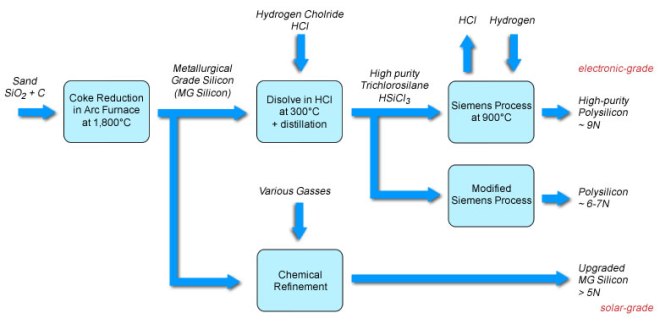
pv_manufacturing_fw

Back when the price of Silicon was 3 or 4 times higher than it was today, it made sense to scale this process up.
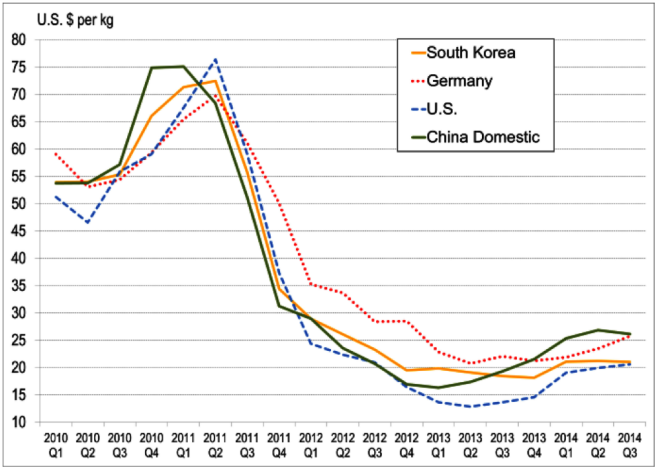
Solar Grade Silicon

No one expected silicon metal prices would fall this much. Meanwhile demand is rising… quite rapidly.

cumulative-global-pv-demand-2004-2017

And yet the price is not rising enough to give reprieve to the underwater companies.
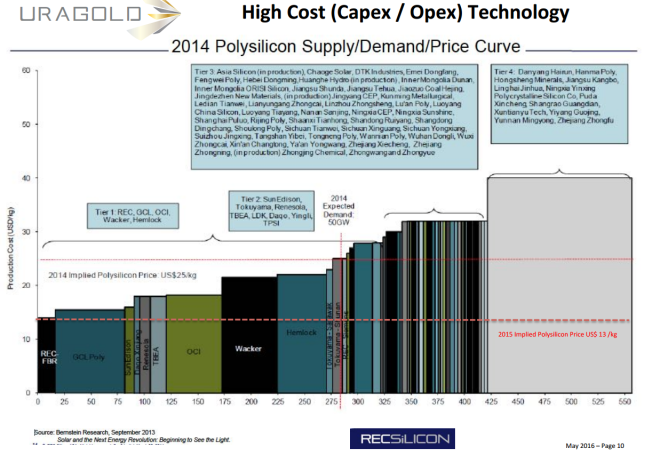
Silicon Opex

It’s unclear how some of these companies will survive. Judging by demand growth it will take at least another 2 years before demand comes close to current capacity. In the meantime, a large share of these companies will continue to lose money. Considering, Chinese cost of production has been over the price of SG Si in China since 2012, it’s not clear how much longer these companies can last.

But it gets better, because if you give an engineer enough time to solve a problem, he OR she will solve it. As I stated earlier, the current process for producing solar grade silicon is inefficient and outdated.

Long term, innovation will completely change the landscape of silicon production as companies like Silicor Materials develop and deploy new non-toxic less capital intensive processes to produce solar grade silicon metal.

Unfortunately, Silicor Materials is not a publicly traded company. But there does exist another pair of companies, Pyrogenisis Canada Inc and Uragold Bay Resources (DISCLOSURE: I am a shareholder of both) that has developed its own one step process for converting quartz into solar grade silicon metal.

These companies should be able to undercut the current competition in a growing market. It’s hard to imagine a more bullish set up.

I haven’t been “doing macro” long, or at least not very well, and rarely have I seen a way to hedge my macro views with a bullish technological trend. Silicon is still the most expensive component of the solar panel. As new technologies are adopted dragging down costs, solar’s adoption will grow.
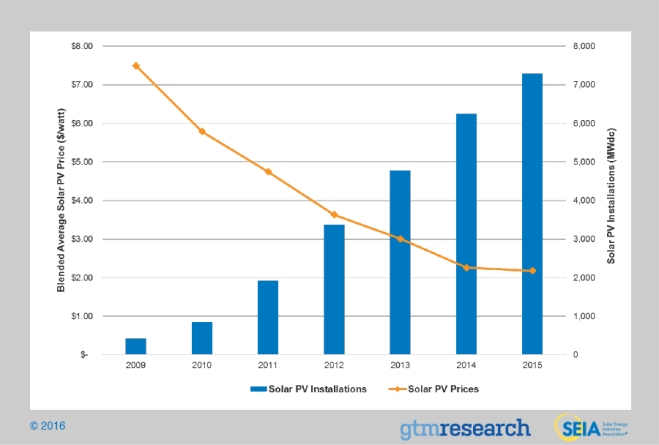
fig3-solargrowthfallingprices

But silicon isn’t the only space I’m looking at. Graphite, another resource almost completely dominated by Chinese production is a similar space ripe for innovation.

graphite-production-2012

Of course you cannot mention graphite without mentioning graphene, which is arguably the most important material to be created in the last 100 years and that’s including anti-matter. The unique 2-D material may soon be mass produced as a byproduct from high grade graphite mines.

The impacts this material will have on our lives is practically limitless and beyond imagination, but the time horizon is rapidly approaching. Within five years we could see mass produced graphene appear in products all over the world.

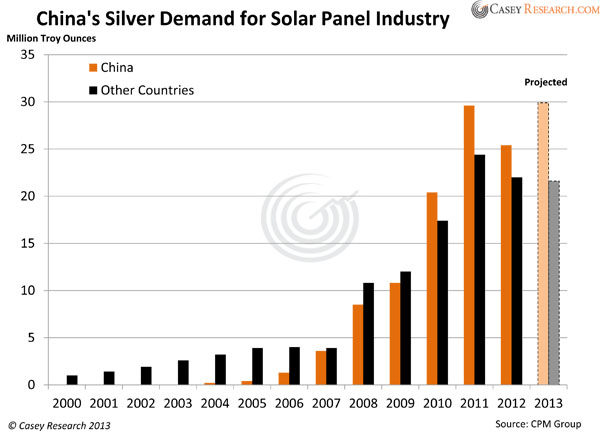
Once again, bringing micro back to macro, silver is also a key component in solar panels. Although it should be noted that solar panel demand for silver makes up for less than 10% of total silver production.
chinassilverdemandforsolarpanelindustry

Not all of the knock on effects of the booming solar industry have been listed. I failed to list the revolutionary potential solar power promises for emerging markets with poor grid infrastructure in Africa, South America, and South Asia. Or the more obvious death of coal fired power plants, and the potential rising demand for nuclear power as the major player in base load power.

I’m going to state the very obvious, but widely ignored: Technological trends, not just solar power, will shape the world and bring sustainable growth at time when growth has never been more paramount. It’s important to recognize such trends and invest in them. The number of positive knock on effects make it that much easier to stay diversified geographically, and politically as well giving the ability to hedge against bearish macro views.


DISCLOSURE: I own shares in Urabay Gold Resources (UBR.cve) and Pyrogenisis Inc (PYR.cve) as well as Talga Resources (TLG.asx) and the commodity silver.



Terminator 6: The Bull Market

Did anyone else see the last terminator film starring Daenarys Targaryen and the Governator? Terminator Genysis? No? Didn’t think so. Don’t worry, you didn’t miss much. Besides this bull market makes for a much more interesting terminator than the latest CGI incarnation I saw in Genysis.

terminator-genisys-t-3000-character-poster

The T-3000 is no match for the SPX-2150. It doesn’t matter what you throw at it. Brexit, insolvent European banks, China’s slowdown, shale oil implosion, nothing will take it down. It just keeps coming! This cybernetic creation of algorithms, central banks, and limitless stimulus seems virtually indestructible right now.

The recent Japanese elections have provided a nice spring board for the risk on environment. USDJPY rose from over 5% in less than four days on hopes of helicopter money. I remain skeptical on the long term viability of such a plan.

Meanwhile bears are on the verge of capitulation. At 2200, a key technical level, investors and traders could be induced to join the party.

The bears, trapped and surrounded like the Allies at Dunkirk, are in dire need of a miracle. Just remember, the night is always darkest just before the dawn (cut to 0:43) .


Fortunately for the impatient among us, now that the S&P has broken out of its 19-month trading range, the battle for the dawn will most likely be decided sooner rather than later.

I’m not going to launch into fears of a serious melt up in stocks. I don’t think we get that nail biting face ripping rally without a rise in bond yields, and for now it seems like bond yields have a ceiling that is constantly falling.

For the second day in a row, the S&P closed at all time highs. Which is a little strange considering, earnings may have fallen for the 5th consecutive quarter.

Earnings

Perhaps even more interesting, is this belief that the earnings recession has bottomed. But if you look at the Atlanta Fed’s GDP now tracker, you see the cyclicality of GDP growth.

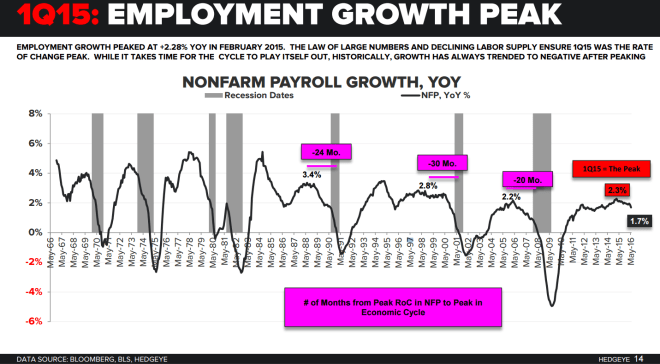
A very keen observation from Raoul Pal. US GDP growth is cyclical and rolling over. That certainly doesn’t bode well for a magical rebound in earnings. And even with the gang busting 287k jobs report, the US job growth continues to slow.

NFP

Slowing employment growth and a weak growth GDP quarter could weigh on oil which seems to be breaking down at least from a technical aspect.

When the falling earnings story first started gaining traction everyone blamed oil. Take out the oil and gas sector and everything looks great they said. It’s ironic that this sector is now holding up US equities. A drop back into the 30’s would likely reignite the high yield bond sell off we saw back in January.

fredgraph

I’m not saying that’s going to happen, but the S&P is priced to perfection. One small step, and the fall is staggering. Just look at the recent rally from a perspective of volume.

In the end, when you pull back the artificial organic material, you’ll see the SPX-2150 is much weaker than thought. It’s had the kitchen sink thrown at it and has kept going which has fueled speculation that this market is indestructible, but in reality it’s barely limping by. Going forward, the key short term indicators to watch are USDJPY, US treasury yields and oil.


Investing in Innovation: Battery Boom

bennie_the_black_bear_im_a_bear_pillow-rc6d50fde2b9744e186d54c658f1cdccc_z6i0f_324

Ask a bear what he is and he will tell you, “I’m a realist.” No one wants to be bearish let alone admit it. Being bearish is the mental state of mind equivalent to a socialist government. Simply, it taxes you.

With each sand castle global leaders build, you pay the realist in you another fine. To think about the world in such simplistic terms can be enlightening but also painful. Especially when the mistakes are this large and this obvious.

sandcastle

As a person who has witnessed countless kingdoms of sand built in front of a rising tide, I can tell you that I’m tired of being bearish. I don’t want to have 60% of my portfolio in gold and US treasuries. I long for the day I buy into an equity market that I BELIEVE is headed higher not because central banks dictate so but because it is supported by rising technological, demographic, and economic trends.

Alas that day is not yet here. As a self described realist, I am forced to make the best with what I’ve got, and what I’ve got is a hill of batteries. Lithium ion batteries to be specific.

These high energy density batteries have received much of their attention due to Elon Musk’s flamboyant comments about taking the entire world’s supply just to satisfy Tesla’s demand. But readers who stopped at the page on electric vehicles (EVs) have missed most of the story.

hero

Which is why the market’s reaction to Tesla’s bid for Solar City was so harsh. Tesla is no longer a car company. With the world’s largest battery factory, Tesla has become a battery company. It’s potentially a great pivot for a company that makes less than 100,000 cars a year at a massive loss.

Car manufacturing is a low margin business with future demand slowing due to technological and social trends, but batteries , where the demand rises as the costs fall, is a high margin business that is growing rapidly.

Now I’m not opining on the viability of this transition. I’m just pointing out that Elon Musk who is a smart man with inside knowledge appears to have staked his future on batteries and not cars. That should be noted.

“Entering 2016 GM said its cells cost $145 per kilowatt-hour, and by late 2021, they could be at the $100 mark.”

The cost of lithium ion batteries is falling while the efficiency and energy density are rising. It’s a beautiful combination and as the trends continue, the uses and demand for batteries will explode.

Grid storage will be the largest market for batteries. Already smart batteries can help control the flow of power through the grid during peak power demand which dramatically cuts costs. But for the past five years, battery technology and its adoption has lagged behind both solar and wind power.

The demand for grid storage is already there, but only now are batteries reaching the point where they can technologically satisfy that demand. As battery tech improves the demand from grid storage will rapidly increase.

Batteries will also have a positive impact on the viability of both solar and wind power as well. Wind and solar are not viable as base load power, and I’m not saying they will be in the next 5 years, but in an increasing portion of the world, the combination of solar or wind power and a large battery will be more than sufficient for household needs.

The battery story seems like a great one, but these days stories rise and fall on the whims and demands of the Chinese people. Fortunately for this story, the China’s rapid growth over the past two decades has only been matched by its capacity to pollute.

Since social stability is key in China, massive strides are being made to placate the growing middle class that wants to live in a clean environment. As a result, no country on earth is investing more into green technology and infrastructure than China is.

Obviously this has led to inefficient uses of capital and some 30% of China’s wind power is sitting idle in the south west. But the point is that China is shifting its demand. And the materials it will consume over the next twenty years will look different from those of the last twenty years.

There are many “new age” metals that will benefit from technological trends and right now lithium is the flavor of the month. Humanity has been a carbon powered race for over 100,000 years but as time progresses, and people expand their horizon they will discover that Lithium is not the only character in this story.

Currently lithium makes up about 2-3% of the overall battery’s cost. That could rise slightly as the demand for such a tightly controlled metal explodes, but it won’t drastically affect the overall cost of the battery.

li_1

From a weight standpoint, lithium ion batteries should really be called cobalt graphite batteries. Per weight, there is more than 10x as as much graphite than lithium in a lithium ion battery.

When it comes to graphite, China is the world’s largest producer, making up 70% of global production, in a market that is currently oversupplied. A lot of this production is done by small unregulated highly polluting companies. Needless to say, China is in the process of consolidating and cutting these inefficient means of production. Thus overall supply is falling in to a market that is seeing demand rising rather dramatically.

There are nuances to every market and the graphite market is no different. Although currently oversupplied, the graphite market is a tale of two purities. The low end market is oversupplied but the high end market which is used in batteries is not.

High purity graphite is not only expensive, but is dirty to make, once again contributing to the hesitation investors and governments associate with this space. A very large graphite resource out of Mozambique will come online later this year further adding to the oversupply and complicating this market.

Just because the graphite market may not be as clear as the lithium market doesn’t mean there aren’t some hidden gems to be found. Just like hydro-fracking technology was to shale, resource companies are finding new and more efficient ways to extract and manufacture high purity new age metals. Graphite, lithium and even silicon are benefiting from these potentially revolutionary technologies.

For example, solar grade silicon is currently mass produced using technology from the 1990’s. Lithium brines are still being extracted using the sun to dehydrate water. The technologies for extracting these metals has lagged the technologies they go into. But that is changing, and that is where I am investing.

For the purpose of brevity, although I’ve now run over 1000 words, I am cutting the post here. In the coming weeks I will dig a little deeper into the specific markets for some of the new age metals such as graphite and graphene, silicon, and uranium. If you would like to know more, stay tuned.