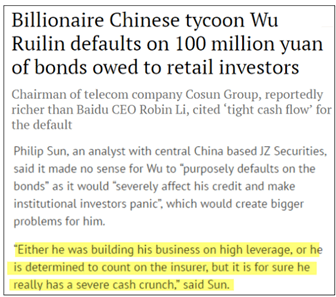

Updating The Global Macro Road Map

Updating The Global Macro Road Map

This is a long article, that you’ll find to be more free flowing than previous articles (Aka I was too lazy to trim some of the fat). I don’t apologize for the length. I find writing down my thoughts to be an incredibly helpful exercise. Just like I find publishing said writings to be incredibly cathartic. With that said, this post was originally supposed to be about China, but then it eventually morphed into a more generalized view on the global economy and the major sign posts I’m looking for as the year progresses. Enjoy!


Those who follow me have probably noticed by now the hefty emphasis I put on narrative when analyzing markets. Lately, the market narrative on China has gone “surprisingly” quiet.

This silence has persisted despite a tremendous amount of action going on underneath the surface.

Screen Shot 2017-04-06 at 2.45.58 PM.png

Like a duck on a pond, China’s legs have been churning a mile a minute. In a country where every financial asset including P2P loans comes with an implicit “government guarantee” there is not much room for restraint. Combine this false sense of security with the PBOC’s almost uncontrolled stimulus in the post crisis era, and it’s not hard to see why the central authorities in China have been so busy over the past year.

Recall that back in Q1 2016, the PBOC and Chinese government launched a massive stimulus program that forced a temporary bottom in not just China’s economy but the global economy as well. With the economy on a seemingly strong rebound, the PBOC began the process of tightening liquidity and imposing some restrictions on lenders.

Unfortunately, when a banking system is as interconnected and shadowy in nature as the Chinese banking system, this process of imposing any sort of discipline is incredibly difficult. From Caixin:

“No one in the banks knows where the money they invested in other banks’ wealth management plans ended up,” an official from the central bank told Caixin earlier. “They could not tell because the selling bank itself used the funds to buy other banks’ wealth management plans.”

So far the PBOC’s tighter monetary policy has gone on without a hitch (unless you count the December panic when a medium size brokerage firm attempted to default on its Trust Beneficiary Rights). As alluded to in the opening paragraph, this relative calm is only surface deep.

Underneath the calm waters, the risks in China’s banking system have merely shifted from one section to another, forcing the PBOC to play a game of whack-a-mole while providing just enough liquidity so that the whole system doesn’t collapse. By now, the ballooning size of Wealth Management Products and their increasing interconnectivity is well known as well known as what they are actually invested in is unknown.

“Along with the surge in the issuance of CDs, more than 15% of bank wealth management products were held by other banks as of June 2016, up from less than 4% at the beginning of 2015, an increase of 3.5 trillion yuan over a period of just 18 months, according to the report.”

What has been less talked about is the burgeoning role that interbank certificate deposits are playing in the Chinese banking system.

Screen Shot 2017-04-08 at 9.06.46 AM.png

From the Caixin:

“In the first two weeks of March, the issuance of interbank negotiable certificates of deposit (CDs) exceeded 1 trillion yuan ($145 billion), following a record net increase of almost the same amount in February, according to data from Wind Information, a financial data provider. The issuance of CDs in January and February was 990 billion yuan and 1.97 trillion yuan respectively.

One possible reason for the explosion in CD issuance in recent months could be the dramatic increase in rates. Rising from 2.8% last August to 4.77% in March. Banks may be trying to lock in the cost of funding before it rises any further.

The interest rates that banks needed to offer to get funds through the CDs have increased as well, reaching an average of nearly 4.77% on March 22 for a three-month contract. In late August, when the central bank started raising money costs through open market operations by tightening the supply of short-term, cheaper funds, the rate was only about 2.8%.”

At the same time, about 48% of CDs are set to expire by the end of the Q2, further driving demand. Of course, these products will all be rolled over at much higher costs, hurting bank profitability. From Natixis Research:

Screen Shot 2017-04-08 at 9.34.43 AM.png

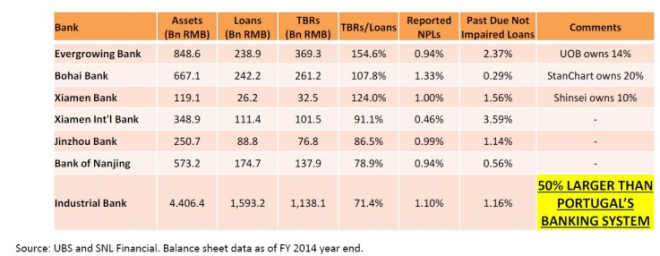
To make matters worse, the rising risk associated with interbank CDs is concentrated in the smaller less well capitalized banks. From Caixin (my emphasis in bold):

“Small and midsize banks have been the primary issuers of interbank CDs. According to a research report from Haitong Securities, nearly 90% of the 7.4 trillion yuan worth of outstanding CDs as of March were issued by the national joint-stock banks and city commercial banks.

Just how poorly capitalized are these banks? From Caixin (my emphasis in bold):

“A simplified way to measure the leverage, as provided by the report, shows that, on average, the total assets of depository financial institutions in China (excluding the central bank) have grown to almost 50 times their net capital. The ratio for some midsize banks, which rely more on interbank loans, has reached 60. In 2007, the average ratio was just about 30.”

So what does this all mean? It seems that the PBOC’s runway to tighten liquidity in the interbank market will be significantly limited going forward. The fact that the PBOC has been able to tighten as much it has without incident is more illustrative of the incredible amount of excess liquidity in the system than its resiliency. Arguably no sector in China has benefited from these high levels of excess liquidity than real estate.

https://twitter.com/macrodidact/status/850423264430235648

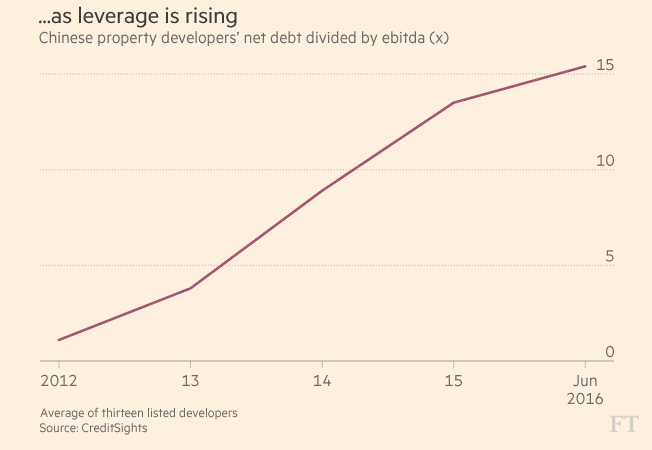
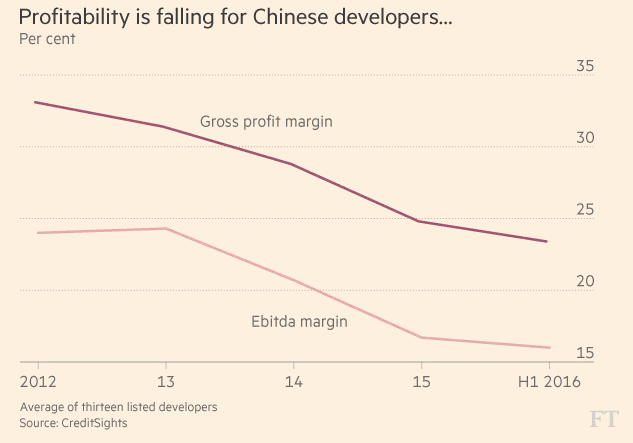
Despite house prices rising at their fastest rate in 7 years, profitability among developers has declined.Screen Shot 2017-04-08 at 5.34.46 PM.png
Screen Shot 2017-04-08 at 5.34.52 PM.png

Falling profits and rising leverage against a falling liquidity backdrop is not exactly the ideal mix for a speculative bubble. But if you ask members of the PBOC, they don’t seem very worried at the moment. Apparently they’ve solved that seemingly “impossible trinity” problem.

From the SCMP:

“Chinese central bankers have done the economic “impossible”, finding a way to have a ­stable yuan, a free market and effective monetary policy.

That is the assessment of two central bank researchers, who claimed in a paper published on the People’s Bank of China’s website on Thursday that Beijing would continue to realize the “impossible trinity”.”

How does that saying go? Something something pride before the fall? This is almost as bad as the Latvian central banker claiming to be a “magic person”.  To be clear Latvia hasn’t found itself in a heap of trouble, and the PBOC’s alleged conquering of the impossible trinity is not exactly an indicator of anything other than central banking hubris which let’s face it is always turned up to 11.

HUBRIS.png


Central bank hubris aside,  it’s true capital flight out of China has stopped… for now.

https://twitter.com/MNIEyeOnFX/status/850338062785761280

Which is not entirely surprising, from my post The Reflation Trade:

“I also see incredible potential for the PBOC to defend the psychologically important $3T reserve level this month. Come the release in early February, the market may be shocked to discover that the $3T reserve level has held. The Yuan could strengthen and the narrative would temporarily shift to the masterful job done by the Chinese Authorities, and developed markets would rally on the back of higher inflation.

My oh my how the narrative shifts. Of course, China has not solved any of its problems. If anything they have grown larger, which has forced the authorities to take drastic actions. Like preventing foreign companies from taking their profits out of the country.

These stricter measures on top of a false sense of currency stability has emboldened Chinese corporates to ramp up their offshore dollar borrowing again. From the WSJ:

“Chinese firms have issued some $52.6 billion worth of U.S. dollar bonds in the first quarter, up 72% from the previous three months, according to Dealogic, and nearly five times the amount from the first quarter of 2016.”

Screen Shot 2017-04-09 at 10.38.13 AM.png

One of the corporations borrowing dollars in the offshore market is one of the most indebted domestic property developers, Evergrande Group.

Screen Shot 2017-04-10 at 9.13.28 AM.png

The purpose of this money is to “refinance existing debt”, because what else can Evergrande do? If Evergrande can’t get profits offshore (if it even has any) how on earth is it going to pay back this debt, unless it borrows even more dollars. From the WSJ (my emphasis in bold):

“In mid-March, one of China’s largest and most indebted property developers, China Evergrande Group , priced three dollar bonds in Hong Kong within a week for a total of $2.5 billion, which the company says it will use to refinance existing debt.”

All it takes is for a little stability in China and everyone loses their minds. But Chinese corporates aren’t the only ones throwing caution to the wind. As pointed out numerous times on Twitter by Darth Macro, investors are increasing their exposure to Emerging Markets, despite deteriorating macroeconomic fundamentals.

https://twitter.com/RagnarD80/status/849914726544965633

https://twitter.com/RagnarD80/status/848328994676199424

https://twitter.com/macrodidact/status/850472001823055872

I think you get the point. Investors have looked around, and found the coast to be clear. Which is why I put an emphasis on the subsurface activity in China. Important to note that it is not just in China where the subsurface activity betrays the market narrative. Any China and EM related story would be unfinished if I did not touch on the US dollar, where once again we find the narrative to be in opposition to the underlying fundamentals. The following is a headline from the WSJ:

Screen Shot 2017-04-06 at 4.07.42 PM.png

“Dollars shortages are now going away, helped by expectations that U.S. regulation will be relaxed, the success of overseas banks in finding alternative sources of finance and greater appetite from investors to pick up what looks like free money left lying around by the global financial system.”

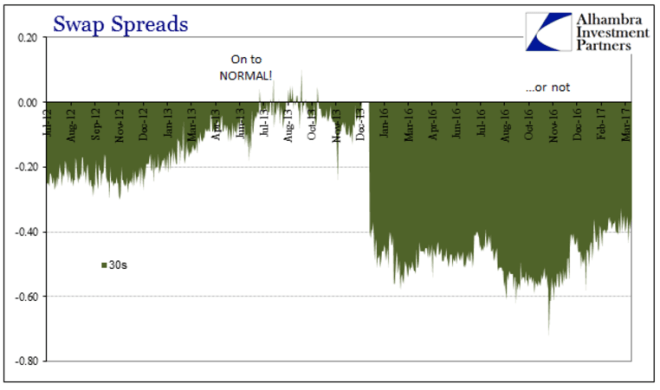
I’ll leave it to Jeffrey Snider of ALhambra Investment Partners to dispel any dollar flow myths. From his appropriately titled article:

Screen Shot 2017-04-08 at 8.31.03 AM.png

“In 2013, the same sentiments were expressed only with QE3 in mind rather than regulations. It was only after the events of later 2014 forward completely and utterly surprised these mainstream opinions that it was after-the-fact decided regulations just had to be to blame. Even if we assume that was and is the case, the relative comparison of swap spreads (or UST yields, eurodollar futures, etc.) then versus now shows a very different interpretation than a return of dollar flow. Markets were much more excited and indicative of a that four years ago versus now, and given that turned out to be a false assertion, what does that say about the same one being prepared all over again?

For one, it was the 30-year swap spread that turned positive if only briefly in the summer of 2013. Almost four years later, the 30s have like the 10s improved but only in comparison to last year; they are still highly negative.”
Screen Shot 2017-04-08 at 8.28.36 AM.png

In spite of this shortage of dollars, the Fed in all of its “wisdom”, has decided that now is the time to take away the punchbowl. After two back to back rate hikes the Fed has quickly moved on to balance sheet reduction.

The hawkish shift from the Fed in light of the subsurface problems in China is either hilarious or astounding depending on your disposition (I myself am half astounded half cracked up). Curiously enough, the most recent FOMC minutes tell a different story (my emphasis in bold).

“Some participants viewed equity prices as quite high relative to standard valuation measures… prices of other risk assets, such as emerging market stocks, high-yield corporate bonds, and commercial real estate, had also risen significantly in recent months.”

Clearly they are worried about something, or as the quote suggests… pretty much everything. If high yield corporate bonds, commercial real estate and equity prices are all overvalued then there isn’t much room for anything else.

Perhaps even more importantly, the underlying US economy is not nearly as strong as the Fed’s hawkish rhetoric or the Trumpflation narrative would suggest. US Q1 GDP growth is weak per usual.

The latest jobs number was a dud as well. Amazon’s onslaught on the retail sector is accelerating.

Or maybe it’s more than Amazon’s creative destruction…

And this could just be the beginning of the bursting of a large multi-decade bubble in American retail stores. Retail square feet per capita in the US is 6x more than that of Europe or Japan. For all the grief Americans give China over its real estate boom, we have one of our own.

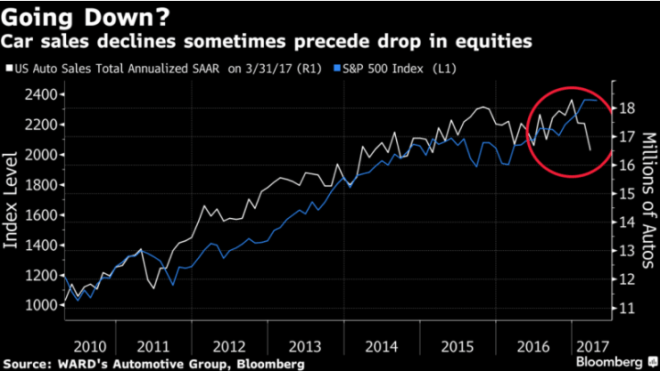
The bursting of this bubble will hurt and spread through out the economy, where we are seeing other bubblicious sectors suffer under tremendous strain. Auto sales have broken down.
Screen Shot 2017-04-09 at 1.21.02 PM.png

Used car prices have dropped sharply.

Of course this not all that surprising given the state of the subprime auto loan bubble.

https://twitter.com/macrodidact/status/850462965476327424

Lastly, lending growth is slowing at an alarming rate.

Screen Shot 2017-04-09 at 1.20.03 PM


I know I’ve gone all over the map right now, so here I’ll try and wrangle some of these ideas back in. China’s economy although swimming in excess liquidity is going to face some headwinds towards the end of the year. Dollar liquidity although better than last year, is nowhere near a level to justify a hawkish Fed. US economic data, is nowhere near the level to justify a hawkish Fed. So why is the Fed hiking? An even better question might be: how have financial conditions been easing in the face of the hawkish Fed?

My answer for this strange development is the short vol crowd.

In this world of passive investing and ZIRP and NIRP, traders and now larger and larger asset managers are just looking for any excuse to sell vol. Every single time the VIX spikes above 13, it is immediately sold. This prevents equities from correcting and leads to a build up of risks in the system.

This is rampant selling of vol will lead to a whirlwind of unintended consequences, because it creates a false sense of security at the Federal Reserve. Historically the only thing that has stopped the Fed from hiking is a falling stock market. The Fed never responds to economic data, or dollar liquidity issues or anything of that sort. It only responds to falling stock prices. And if stock prices are being artificially propped up due to this “rampant selling of vol” then the Fed will keep on hiking or said differently vol sellers have numbed the Fed to its own hawkish policy!

It is quite likely given the rampant vol selling that the Fed has already tightened too much. Especially if you use the Wu-Xia shadow fed funds rate.

With that in mind, I think the odds of the stock market going considerably higher are quite limited. I’ve expressed my bearish views on the stock market for the past few months in a number of posts and believe my position has continued to be supported by the economic data as well as the capital flows. Dumb money in.

Smart money out.

https://twitter.com/jtepper2/status/850673339685318656

Add the two together and you get record dumb money longs and record smart money (commercial hedgers) short!

Now I don’t have a crystal ball, so I don’t know if stocks go up or down over the rest of the year. I’m just saying the odds that stocks continue to rise is falling at a rapid rate. But if stocks continue to rise, we should expect the Fed’s hawkish rhetoric to continue DESPITE any deterioration of economic data. When the next correction does come, I suspect any talk of “balance sheet reduction” will be dropped faster than Romulan Red Matter (although technically it was created by the Vulcans?).


DISCLAIMER: This blog is the diary of a twenty something millennial who has never stepped foot inside a wall street bank. He has not taken an economic or business course since high school (for which he is immensely proud of) and has been long gold since 2012 (which he is not so proud of). In short his opinions and experiences make him uniquely unqualified to give advice. This blog post is NOT advice to buy or sell securities. He may have positions in the aforementioned trades/securities. He may change his opinion the instant the post is published. In short, what follows is pure fiction based loosely in the reality of the ever shifting narrative of the markets. These posts are meant for enjoyment and self reflection and nothing else. So ENJOY and REFLECT!
Trumpflation: The Narrative Is Deflating

Trumpflation: The Narrative Is Deflating

Screen Shot 2017-03-26 at 2.50.41 PM

“I can feel it coming in the air tonight, oh Lord”

~ In The Air Tonight by Phil Collins

“Father tell me, we get what we deserve
Oh we get what we deserve

And way down we go
Way down we go
Say way down we go
Way down we go”

~ Way Down We Go by Kaleo

“The closest thing to eternity on earth is a government program.”

~Ronald Reagan

You would think Reagan fanboys like Donald Trump and Paul Ryan would heed their idol’s words of wisdom, but no. This week, the world’s worst healthcare bill was pulled effectively putting the Trumpflation narrative on notice. To be clear, tax reform is not impossible, just a lot less likely than the market had originally priced. We should see those diminished odds be reflected across the Trumpflation trade over the next few weeks.

I could not agree more with Jawad’s assessment. All the legs of the Trumpflation narrative came under fire this week. First up, long term bond yields are showing no signs of higher expectations of growth. Possible double top forming in the 10 year.

Screen Shot 2017-03-26 at 8.48.20 AM.png

The 30 year is has fallen back to 3% as well.

Screen Shot 2017-03-26 at 8.49.47 AM.png

https://twitter.com/RagnarD80/status/845763066331582468

Of course falling interest rates, and a flatter yield curve bode quite poorly for one of the largest beneficiaries of Trumpflation, US financials.

Screen Shot 2017-03-26 at 9.07.55 AM.png

In this new era of Trump, banks were set to be deregulated allowing them to make more loans. A steepening yield curve means that banks would make more money per loan. On top of making more loans, banks would make more money per loan, a bank bull’s dream. Not only were Trump’s plans of deregulation dealt a sizable a blow and the yield curve flattened to post crisis lows but to make matters even worse, bank lending has been slowing like the US economy is about to enter a recession. In short, this euphoric fever dream has quickly turned into a bad mushroom trip.

From the article:

“We find three key channels that are inhibiting demand growth: 1) political uncertainty, 2) elevated corporate leverage, and 3) Fed policy, both through past tightening and expected tightening going forward. We see little evidence that the slowdown in lending is due to tighter bank or non-bank lending standards.”

Given the embarrassing defeat of the Republicans and Trump administration this week, it appears political uncertainty is far from resolved. Elevated corporate leverage is not going away anytime soon. And the Fed continues to talk a big game despite a lack of data to support their hawkish stance.

It’s not “hard” to see where I’m going with this. It’s 2011 (Déjà vu) all over again.

Screen Shot 2017-03-26 at 2.44.54 PM.png

The Fed may think it can pull its foot off the pedal but the market knows better.

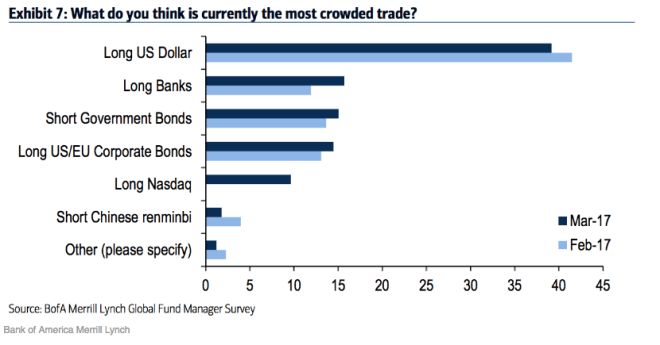
Which brings me to the dollar or what many consider to be the most crowded trade. If the Fed is reached peak 2017 hawkishness, this crowded traded could be in big trouble.

Screen Shot 2017-03-26 at 9.39.02 AM.png

Those betting on higher growth, higher US interest rates, a resurgent financial sector and tax reform are also betting on a stronger dollar. Although I think the case for a stronger dollar over the long term continues to build, the short term forces are only pointed in one direction and that is down.

Screen Shot 2017-03-26 at 1.28.54 PM.png

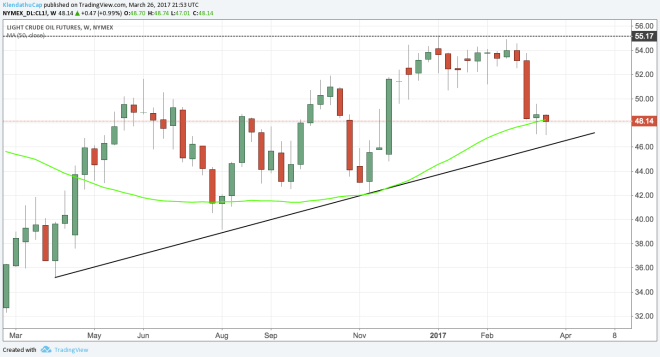
Lastly, oil closed under the 50 week moving average this week for the first time since last July.

Screen Shot 2017-03-26 at 2.53.27 PM.png

I don’t think speculators realized US shale could grow production as fast as it did.

Either that or they really did believe US economic growth was accelerating. Which brings me to the rising role that US shale has played in US economic growth over the past year.


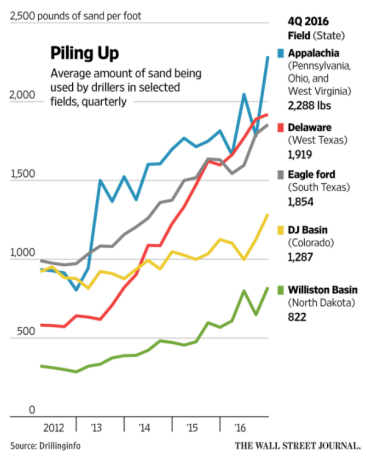
The trucking and sand industries have been huge beneficiaries of the US shale resurgence. To increase the effectiveness of their wells, companies have been using more and more sand per well.

Screen Shot 2017-03-26 at 2.07.09 PM.png

“Tudor, Pickering, Holt & Co. estimates the sector will need 120 million tons of sand by next year, more than double the demand in 2014 at the height of the U.S. drilling boom.”

The increased demand for sand has flowed through to increased trucking demand as well.

“The expense is compounded by the logistics of moving sand from mines to well sites thousands of miles away. Drillers don’t use sand found on a beach. They prefer fine white silica, much of it found in northern Midwest states. Shipping 5 million tons of sand can require 200,000 truck loads, according to a 2013 study by the University of Wisconsin.”

In short, US economic growth is heavily reliant on US shale growth. Lower oil prices not only puts bond bears on notice but US economic bulls as well. The longer oil stays low, the more likely we’ll begin to see a further liquidation of the record long oil contracts.

Screen Shot 2017-03-26 at 2.37.46 PM.png


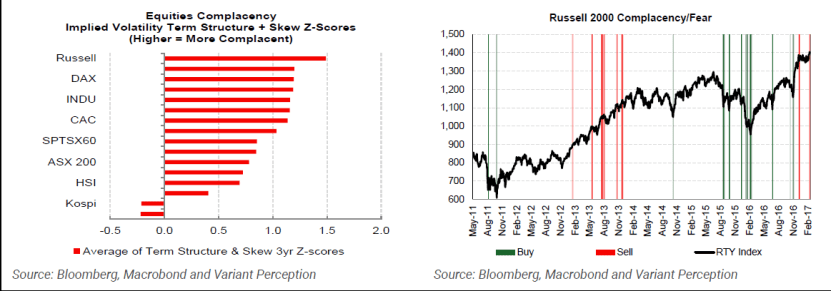
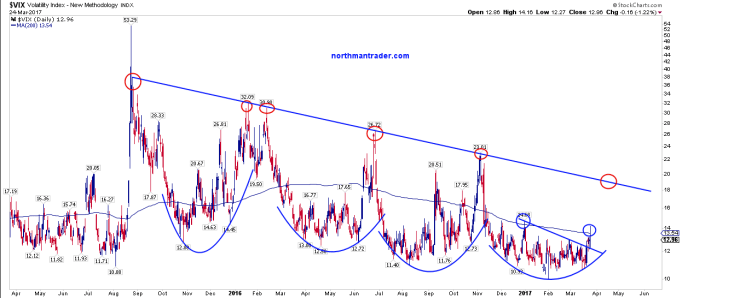
Given the fragility of the situation you might expect investors to be a bit more worried about a pick up in volatility, but you would be wrong. Despite the potential unwind of several large speculative trades, investors remain incredibly complacent.

Screen Shot 2017-03-26 at 2.11.44 PM.png

A lot of this may have to do with volatility being sold short. The fact that this week marked the first weekly close above 12 this year is simply incredible. Which leads me to believe that the sell off we saw this week is likely a prelude to a larger move.


DISCLAIMER: This blog is the diary of a twenty something millennial who has never stepped foot inside a wall street bank. He has not taken an economic or business course since high school (for which he is immensely proud of) and has been long gold since 2012 (which he is not so proud of). In short his opinions and experiences make him uniquely unqualified to give advice. This blog post is NOT advice to buy or sell securities. He may have positions in the aforementioned trades/securities. He may change his opinion the instant the post is published. In short, what follows is pure fiction based loosely in the reality of the ever shifting narrative of the markets. These posts are meant for enjoyment and self reflection and nothing else. So ENJOY and REFLECT!

The End of Monetary Policy Divergence: RIP US Equity Outperformance?

The End of Monetary Policy Divergence: RIP US Equity Outperformance?

The past several months I’ve been pointing out that speculators have been increasingly shifting to one side of the boat, long reflation. And then this week, central banks finally joined the party, tightening monetary policy only after these inflationary base effects had peaked.

I think this development is very bad over the medium term for global liquidity conditions. As noted by Johnathan Tepper in his recent Macrovoices interview, higher inflation and economic growth will pull excess liquidity out of financial assets and into the real economy. Throw in the hawkish shift of the world’s four largest central banks, and global liquidity conditions in the second half of the year should not be nearly as elevated as they are today.

With that said, global liquidity will not be the main topic of this week’s blog post (but I’ll touch on it later). Instead, I am choosing to focus again on yet another wobbly pillar of not just the reflation trade but US equity market’s outperformance these past +3 years as well.

In light of the hawkish shift of foreign central banks, the Fed finds that it is no longer the only game in town. Since 2013, the Fed’s relatively hawkish stance was super charged by the incredibly dovish policies that foreign central banks embarked on. During that time the ECB and BOJ increased their asset purchase programs and adopted negative interest rate policies. The combination of these central banking policies pushed capital into the US and strengthened the dollar.

As the dollar is a major source of emerging market funding, the stronger dollar tightened financial conditions in these countries, and hurt their economies which led to a prolonged period of capital outflows and equity market underperformance (vs the US). During this time, the phrase, “the cleanest shirt in the dirty hamper” was commonly applied to the US dollar, economy and stock market, but is that still true?

From a technical standpoint these trends seem to be waning and on the verge of a reversal. SPY / Europe (IEV):

Screen Shot 2017-03-20 at 8.37.46 AM.png

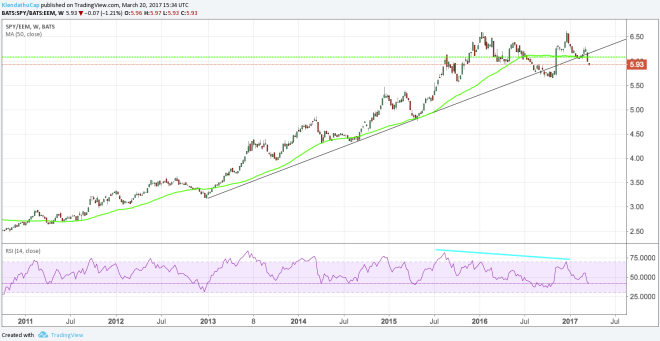
Despite the parabolic move higher, US equities have gone nowhere against emerging markets for over 18 months and counting. This week, we saw a break below the 50 week moving average as well as the +3 year trendline. SPY / Emerging Markets (EEM):

Screen Shot 2017-03-20 at 8.34.59 AM.png


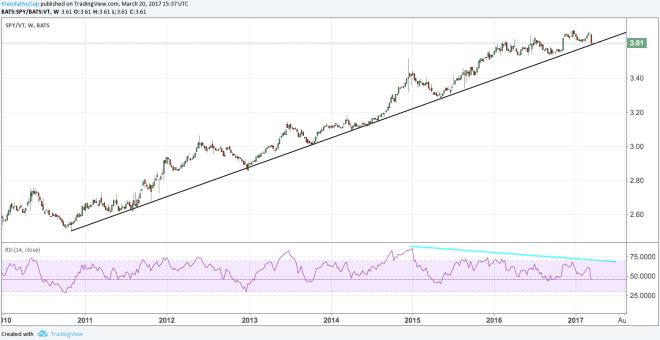
SPY / World (VT):


Screen Shot 2017-03-20 at 8.37.32 AM.png

With the central banking divergence set to converge, we could even see the Fed hold steady or shift to a more dovish policy while the ECB and BOJ further tighten monetary policy. Given that the BOJ and ECB are still experimenting with NIRP there is plenty of room for them to tighten their monetary policy. Could you imagine the rally we would see in European financials if the ECB reduced its NIRP tax on the banks?

The Fed on the other hand may have overplayed its hand. If we look at inflation where it seems everyone (except those holding record treasury short positions) is now aware of the falling base effects associated with energy prices.

But in the US, little ink has been spilt over one of the largest contributors to inflation, rental prices.

In short, the inflationary pressures that the Fed has tried to get ahead of are unlikely to develop before the June meeting. Meanwhile, economic growth is also likely to disappoint or at least not accelerate to the upside as lending growth continues to fall.

https://twitter.com/DonDraperClone/status/842855436055404544

Corporations have also put their debt issuance on hold as they wait for Trump’s regulatory cuts and stimulus package to form up.

If Trump and Congress cannot get their act together, look for the Fed to lower expectations of a future rate hikes.

Screen Shot 2017-03-19 at 8.57.54 AM.png

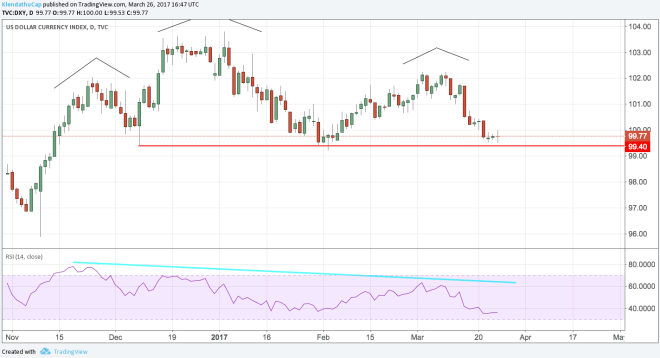
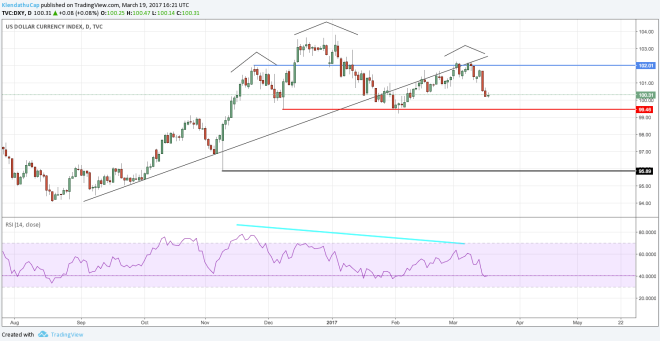
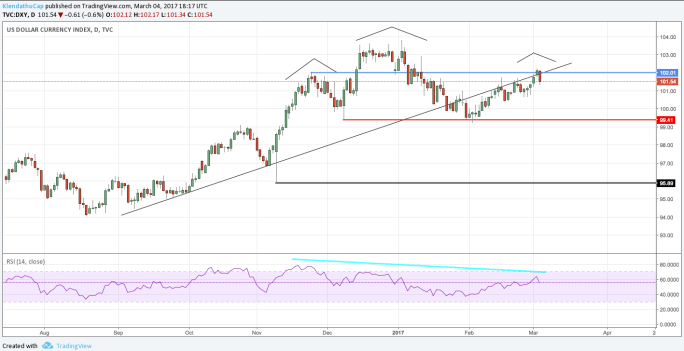
Which would mean that the Fed is unlikely to defend the dollar, and we could see it fall below the 99.5 level, completing this H&S pattern that I’ve been calling for these past few weeks. More importantly, by not defending the dollar, the Fed is essentially giving the green light for capital to leave the US.

Screen Shot 2017-03-19 at 9.21.17 AM.png

Lastly, any narrative about capital flight would not be complete without the country who has suffered from capital flight the most these past few years, China. And if there is a country that would benefit more from a falling dollar and falling US treasury yields than China I would not know it.

Previously I noted that the central authorities in China were hard at work to blow another stock bubble, Bitcoin: The Rising Tide Pressures The Biggest Leak:

“The stock market which everyone believes left for dead, may rise from its shallow grave and roar like never before. Pension funds will begin allocating additional holdings to the stock market as soon as this week. This is a pretty serious development. The last thing Beijing wants to do, is torpedo the pensions of millions of workers. On the back of this move, Chinese authorities have cut equity margin requirements from 40% to 20%.”

Just last week, the PBOC hiked interest rates. The reason: to apply more pressure on the nation’s out of control housing bubble.

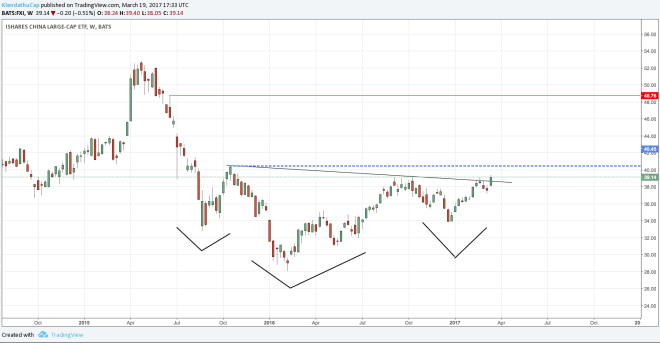
It is likely that the authorities are trying to funnel China’s big ball of money back into other asset classes such as precious metals and equities. The inverse H&S pattern is quite obvious, throw in a weaker dollar and falling treasury rates and a new bull market could in fact be in the cards.

Screen Shot 2017-03-19 at 10.33.26 AM.png

It’s worth pointing out, that being bullish Chinese equities does not mean I am necessarily bullish on China’s economy, or global growth for that matter. There’s still plenty of warning signals out there.

And as I noted earlier, the Chinese authorities are actively working to deflate their booming real estate bubble. If successful in their efforts, the deflationary effects, will reverberate across not just emerging markets but the globe. And this in my view would likely mark a great opportunity to be long the dollar. As global liquidity begins to dry up around the world approximately 3-6 months from now, the dollar should bottom and begin to build up a head of steam for all the wrong reasons, There Is No Alternative (TINA).


DISCLAIMER: This blog is the diary of a twenty something millennial who has never stepped foot inside a wall street bank. He has not taken an economic or business course since high school (for which he is immensely proud of) and has been long gold since 2012 (which he is not so proud of). In short his opinions and experiences make him uniquely unqualified to give advice. This blog post is NOT advice to buy or sell securities. He may have positions in the aforementioned trades/securities. He may change his opinion the instant the post is published. In short, what follows is pure fiction based loosely in the reality of the ever shifting narrative of the markets. These posts are meant for enjoyment and self reflection and nothing else. So ENJOY and REFLECT! 

Mirror Mirror On The Wall: Is The Reflation Trade About To Fall?

Mirror Mirror On The Wall: Is The Reflation Trade About To Fall?


On Friday, Grant Williams announced he was working on a new presentation and asked the twitter-verse what they thought the craziest chart in the world was.

If you haven’t read the responses, I highly recommend that you do. There are a lot of really great charts (although Bitcoin is not one of them, give it a few more years folks). Of course, being somewhat of a reflation trade fanatic, I threw out a rather expected response.

I also forgot to add one very important component to this trade which is for speculators and hedge funds to be very long US stocks and short volatility, but we’ll get to this bit later.

https://twitter.com/ArchaeaCap/status/838874756166336512


Arguably the most overextended, and most talked about leg of this trade is the speculative long oil position. In 2017, we’ve seen speculators add to their net long position by about 200,000 contracts.

Screen Shot 2017-03-09 at 3.50.15 AM.png

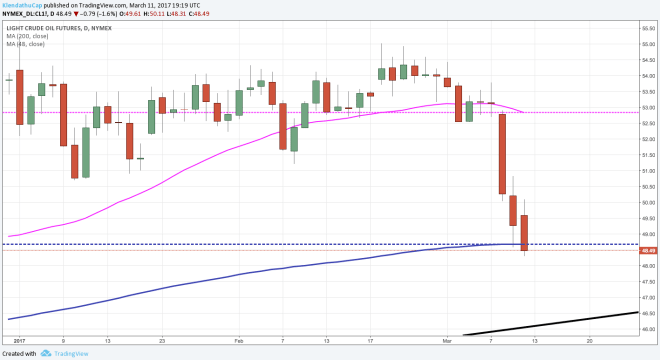
With oil below its 200d ma (dark blue line) and at its lowest point this year, even without counting the cost of rolling these positions over, AT LEAST 40% of these contracts are in the red.

Screen Shot 2017-03-11 at 11.19.12 AM.png


Students of history will recall that the last time speculative positioning was this extreme oil tumbled over 70% in the following year. During this time (2014), Hedge Funds and speculators operated under the false assumption that OPEC had their back.

Screen Shot 2017-03-12 at 6.58.16 AM.png

Once again, OPEC has warned the US shale and more importantly the speculators that OPEC does not have their back.

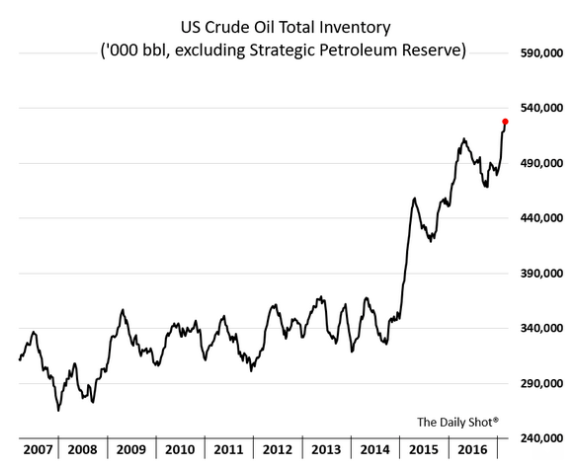
The poor fundamentals supporting higher oil prices only gets worse from here. US oil inventory is at a post WWII record high.

Screen Shot 2017-03-11 at 10.59.44 AM.png

Meanwhile, US gasoline demand has also been “unexpectedly” soft.

Screen Shot 2017-03-11 at 11.00.17 AM.png


At the same time, US shale producers currently holding an extreme short futures position making them well prepared for a downturn in oil prices.


Screen Shot 2017-03-11 at 5.57.06 PM.png

On top of being well positioned for a downturn, US shale breakeven prices have collapsed in the last two years.

In order to cripple the growth of the US shale industry we’ll need to see oil prices below $40 for a prolonged period of time. That’s not exactly music to the ears of these record long speculators…

Which brings me to the crux of my argument: If the price of oil continues to fall, hedge funds and speculators will take incredible losses. These losses will begin to weigh on their other positions which they also have levered themselves to the hilt on and force them to unwind these positions as well. Taking into account that the fundamentals supporting their extreme positioning have continued to deteriorate, any potential unwind could become incredibly violent as the markets return to reality.

Screen Shot 2017-03-12 at 11.15.21 AM.png

In the past month I’ve written counter arguments for two of the reflation trade positions (long US dollar and long US stock market) and given that oil base effects have played a key role in driving inflation higher I believe we are about to see a tremendous amount of pressure applied to yet another one of these speculative positions, short bonds.

Screen Shot 2017-03-11 at 12.23.32 PM.png

Recall that oil prices bottomed in February 2016. With base effects firmly behind us, and the price of oil set to head lower, we could see oil quickly go from an inflationary pressure to a deflationary one.

Screen Shot 2017-03-12 at 10.58.26 AM.png

And if we give the recent rise in rates a historical perspective, we find that we are at the top of a 30+ year channel… and people make fun of me for betting against an 8 year trend.

https://twitter.com/DavidInglesTV/status/839961337971142656

I couldn’t have said the following better myself.

AND YET this is the exact opposite positioning that we see from hedge funds and speculators, who are not only short bonds but extremely long stocks!

Since my bearish post on US equities, the technical deterioration of the US stock market has only gotten worse.

https://twitter.com/NorthmanTrader/status/840931689673166848

https://twitter.com/teasri/status/839233389702037504

https://twitter.com/NorthmanTrader/status/839961820991524864

https://twitter.com/NorthmanTrader/status/839916736744914945

Investor appetite for junk bonds appears to be waning.

At a very key juncture I might add.

Insiders are running in terror from the market.

But don’t worry, hedge funds aren’t alone in their foxholes, retail investors have finally joined the party.

So much for the most hated bull market in history. Retail have responded to higher prices and Donald’s rhetoric. They’ve heard that Donald Trump is going to enact some super stimulus and tax cuts that would transform the US economy into a soaring eagle that shoots laser beams out of its eye sockets.

Of course, the reason retail investors are in the stock market has nothing to do with the underlying fundamentals of the actual reflation trade or US economic health for that matter. I hate to sound like a broken record but here is a quote from The Reflation Trade:

“But investors have become so accustomed to the US driving the global credit cycle that they have missed the origin of the reflation trade. The dollar, commodities and inflation have all risen together for the first time in over a decade which has left investors scrambling for a narrative to explain this paradox. Fortunately, the recent US presidential election has provided just that. Despite the “coincidence” of commodities bottoming with China’s economy in February of last year, investors have latched on whole heartily to the “Trumpflation” narrative. Or to use another analogy, investors have entered the Jade City, but they have become distracted by the Giant Green Floating Head.”

screen-shot-2017-01-16-at-12-33-17-pm

If we examine the underlying health of the US economy, we find it is quite weak. Despite this Trumpflation narrative, loan growth over the past two months has actually been negative.

Consumer lending standards are tightening.

Screen Shot 2017-03-11 at 12.26.05 PM.png

3-month LIBOR continues to hit post crisis highs.

And even with the tremendous growth we’ve seen in US shale, the US economy has continued to slow. Going from 1.9% in Q4 to just 1.3% in Q1.

The accelerating growth in employment we’ve seen, although enough to spook the Fed into hiking, has diverged dramatically from the underlying fundamentals of GDP growth.

And yes, let’s not forget the Fed is prepared to hike interest rates for the 2nd time in just 3 months. This dramatic tightening has put a great deal of pressure on China’s slowing economy.


And to top off this cluster fuck of speculative positioning, it is important to note that the VIX has been sold shorter than Tyrion Lannister.

Fortunately as we all know, a Lannister always pays his debts.

Screen Shot 2017-03-12 at 9.20.52 AM.png

Or just watch and wait for oil volatility to spread to other asset classes.

So while hedge funds and speculators are watching Trump for false bull signals, they are missing the underlying weakness. To make matters worse, investors and speculators have not been this positioned for a move in the global economy since the world was supposed to end in 2009.

Screen Shot 2017-03-11 at 4.25.51 PM.png

666 becomes 999 which some how becomes 1999 but wait the year zero didn’t actually start till the year 10, which makes the year of the devil 2009!

OK bad Arnold Schwarzenegger movie references aside (I’m optimistic to think that 3 people will get that reference), my point is that investors are levered to the hilt in almost all the wrong places: Long dollar, long commodities, long US equities, short volatility and short US bonds.

Until now, these levered positions were a powder keg in search of a spark. If the price of oil continues to fall we could witness a forced unwind of these extremely levered speculative positions which would come at a time when the market is incredibly fragile and the Fed has been uncharacteristically hawkish.


DISCLAIMER: This blog is the diary of a twenty something millennial who has never stepped foot inside a wall street bank. He has not taken an economic or business course since high school (for which he is immensely proud of) and has been long gold since 2012 (which he is not so proud of). In short his opinions and experiences make him uniquely unqualified to give advice. This blog post is NOT advice to buy or sell securities. He may have positions in the aforementioned trades/securities. He may change his opinion the instant the post is published. In short, what follows is pure fiction based loosely in the reality of the ever shifting narrative of the markets. These posts are meant for enjoyment and self reflection and nothing else. So ENJOY and REFLECT! 

Toro: Dollar Bulls Charging At The Fed’s Red Cape

Toro: Dollar Bulls Charging At The Fed’s Red Cape

The dollar story is a very interesting one. As the global monetary system’s reserve currency the dollar does not behave like any other fiat currency. The history of other monetary systems typically lasts around 40 years. At 46 years, our current post-Bretton Woods system (beginning in 1971), is old, rickety and fraught with danger. These instabilities have created powerful structural forces that have propelled the dollar higher. The most recent episode was the 2014 rising dollar story that crushed oil and other commodities as well as the Emerging Markets that depend on them.

These forces are still at work. They haven’t gone away, and neither have the bulls who are aware of their presence, no matter how far in the background they may be. I consider myself in this camp, but at the same time, as I indicated in the previous sentence, I believe these forces to be mostly hidden in the background, waiting to be thrust again into the light.

On the other hand, I see a confluence of bearish dollar forces at work. Despite the amazing soybean quarter of 2016 which almost puts TSLA’s Q3 “positive cash flow” to shame, US GDP growth has been sub 2%. Q1 2017 is likely to come in under 2% as well.

It is important to note that these two quarters will have taken place before the effects of rising interest rates and the stronger dollar will be fully felt. These sub par GDP numbers also include the incredible growth we’ve seen from the US shale industry. Is some other US industry going to magically contribute to GDP going forward? It is hard to imagine a scenario where US economic growth will surprise to the upside.

And yet the Fed still finds reasons to hike interest rates. Janet Yellen, looking through her rearview mirror points to the fantastic economic strength we’ve seen in the larger foreign economies.

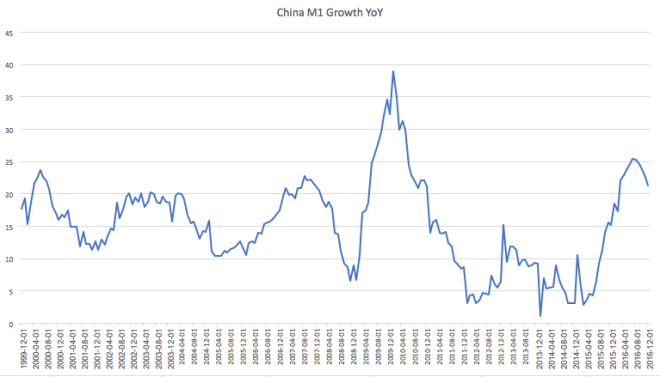
First off, China does not look as healthy as Janet Yellen’s rearview mirror suggests. The GDP growth target in China has fallen to 6.5% and, more importantly, M1 growth has rolled over which suggests China’s best days are now behind it.

Part of the readjustment in China’s growth is due to the unstable nature of the country’s real estate boom. Xi’s approach to a tighter monetary policy and more stable growth should slow the real estate boom and have far reaching effects for not just China’s economy but commodities and Emerging Markets as well.

Screen Shot 2017-03-04 at 11.38.05 AM.png

Screen Shot 2017-03-04 at 11.38.20 AM.png

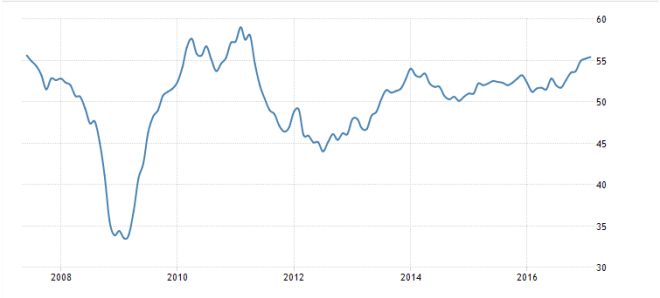
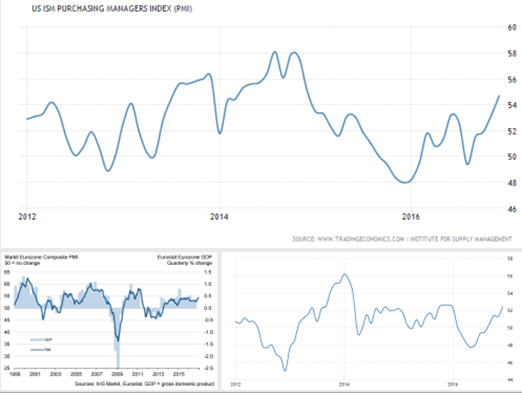
As for Europe and Japan, yes it is true their economies have responded positively to the reflation trade. Because these economies have been trapped in deflation the longest, it makes sense to see them be the largest beneficiaries of inflation (at least in the short term). Eurozone’s PMI is at its highest point in over 5 years.

Screen Shot 2017-03-05 at 3.49.53 AM.png

We haven’t seen a Japanese PMI this positive since Abenomics’ heyday in 2014.

Screen Shot 2017-03-05 at 3.54.55 AM.png

Meanwhile, warning signs have piled up in the US, and the ISM manufacturing survey despite being elevated could peak as early as this month.

But we know the real reason the Fed is prepared to hike. The global reflation trade has certainly given Janet and her ilk a false sense of comfort, but the odds of a fed rate hike were incredibly low until a week ago.

Screen Shot 2017-03-04 at 9.43.58 AM.png

That is, until The Donald gave his State of the Union address.

There was no US economic news between mid February and now to suggest such a rapid rise in March rate hike odds. Trump spoke, and the Fed panicked. If everything Donald said was in fact going to happen and at the pace he implied, the Fed would have undoubtedly fallen behind the curve. But is Trump really going to get the things he desires as soon as he suggests? From my November blog post, It’s A Trap!:

“In order to win the election, Donald Trump successfully united a diverse group of people and yet he didn’t win the majority vote. And although the republicans may have won congress, Donald is hardly a republican president. Donald Trump is akin to a battle commander who has charged too far ahead of his troops. He will need to wait to gather the army before he can launch an effective attack.”

However, eloquent and well spoken his State of the Union address may have been, it is of vital importance to realize that Trump does not write the bills. Trump does not pass the bills. The fractured and incompetent Congress does. A large portion of Democrats are still sore from “their” loss in November, and are opposing Trump on every issue imaginable. Meanwhile, the Republicans are split between a Border Adjusted Tax, repealing Obamacare, and a number of other issues. Republican Senator Rand Paul hasn’t even been allowed to see the current bill.

https://twitter.com/darth/status/837352088556359680

Trump’s stimulus is further out than the market and more importantly the Fed anticipates. It is more likely that the Fed is hiking into weakness than strength. Speaking further to probabilities, it is likely that the March rate hike will mark the peak in Fed’s hawkish stance for the year, and yet Hedge Funds are positioned for further US economic strength and inflation.


Somewhat paradoxically, funds are also incredibly long commodities.

The long dollar and long commodity trade is also known as the reflation trade. Rising global growth pushes up demand for commodities, which props up prices which in turn pushes up inflation thereby leading to a rise in bond yields. US bond yields rise higher than those in EU and Japan due the QE and NIRP policies further propelling the dollar higher.

But the reflation trade is not only old and well known but perhaps most importantly is likely turning. As I believe the origin of the reflation trade is found in China (not Trump), it should worry these reflation bulls that China’s economy is slowing not accelerating. It should be even more worrisome that the Fed is hiking not because of improving Chinese economic data but Trump’s rhetoric. From my post The Reflation Trade:

“But investors have become so accustomed to the US driving the global credit cycle that they have missed the origin of the reflation trade. The dollar, commodities and inflation have all risen together for the first time in over a decade which has left investors scrambling for a narrative to explain this paradox. Fortunately, the recent US presidential election has provided just that. Despite the “coincidence” of commodities bottoming with China’s economy in February of last year, investors have latched on whole heartily to the “Trumpflation” narrative. “

The base effects from reflation should peak this month (the data from February is released in March). The Fed with its well polished rearview mirror should fall hook line and sinker for the inflationary data just as it is peaking. Meanwhile growth from the EU (if the specter of Le Pen disappears) and Japan could surprise to the upside while the US lags. Going forward, we should expect Fed dovishness, not hawkishness and dollar weakness not strength.

Screen Shot 2017-03-04 at 10.17.29 AM.png


DISCLAIMER: This blog is the diary of a twenty something millennial who has never stepped foot inside a wall street bank. He has not taken an economic or business course since high school (for which he is immensely proud of) and has been long gold since 2012 (which he is not so proud of). In short his opinions and experiences make him uniquely unqualified to give advice. This blog post is NOT advice to buy or sell securities. He may have positions in the aforementioned trades/securities. He may change his opinion the instant the post is published. In short, what follows is pure fiction based loosely in the reality of the ever shifting narrative of the markets. These posts are meant for enjoyment and self reflection and nothing else. So ENJOY and REFLECT! 


Warning Signs Pile Up In The US

Warning Signs Pile Up In The US

In a follow up to my previous post, Trump’s First Stock Market Correction: Coming Soon, I am going to outline a growing list of warning signs that suggest the US equity markets are fast approaching a correction.


Damn do markets love inflation. They say hunger is the best sauce, but wow just wow, after 5 long years of deflation, PMIs around the globe have started to roar.

What is most incredible about this rally is how broad based it has become. Price action in Emerging Markets is incredibly bullish.

Brasil has clearly been eating its proverbial Wheaties as well. To think I wanted to short it last March…

Screen Shot 2017-02-22 at 3.28.17 AM.png

But in the land of the longest running bull market, despite what the Tweeter in Chief, Donald Trump, says the stock market does not reflect reality.

Exactly… we don’t even have a tax plan yet… or a functioning legislative branch for that matter. Jawad Mian of Stray Reflections adds:

“The political uncertainty so apparent in both the US and Europe has not really dented market optimism yet but the global equity rally is extremely stretched, with record levels of speculative long positioning in the Russell 2000 and the S&P 500 pricing-in a staggering 30% earnings growth for 2017.

Of course S&P 500 earnings have been falling for the past 8 months…

Cognitive dissonance indeed. Although you can’t entirely blame them given the elevated levels of economic surprises.

screen-shot-2017-02-22-at-3-55-32-am


It’s hard to imagine conditions will continue to surprise to the upside, in the US, especially, where most of the surprise has been in the form of soft data or sentiment.

Further compounding the peak in economic surprises, is the movement in US treasury bonds which typically has a negative impact on the economy.

screen-shot-2017-02-06-at-4-40-11-pm

And yet the move higher in interest rates has not been enough to counteract the rise of inflation.

This has helped fuel the price of gold, as well as has Marine Le Pen’s rise in the polls.

As we approach the French elections which have the most binary outcome of any election, we should expect a pick up in volatility. At the same time, US equity markets have been historically calm.

To put this level of calm into perspective, the chart below shows the number of 1% down days out of the last 200. At just 5, we are at the all time lows last seen in the summer of 2007, when the dollar was about to fall off a cliff, while EM and commodities soared (we’ll get to this bit later).

The indicators only get worse from here… The VIX which has been sold short like never before is starting to mis-behave.

At the same time we are seeing further warning signals from inflation and bonds.

From a liquidity standpoint, the US is also at risk.

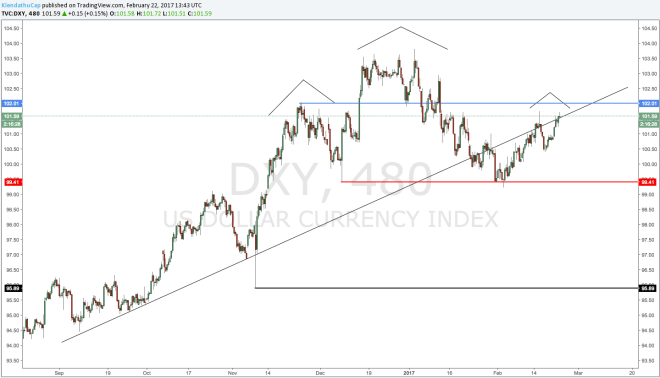
This can also be seen in the DXY forming a potential H&S pattern that would take us to the election night lows.

screen-shot-2017-02-22-at-5-43-21-am

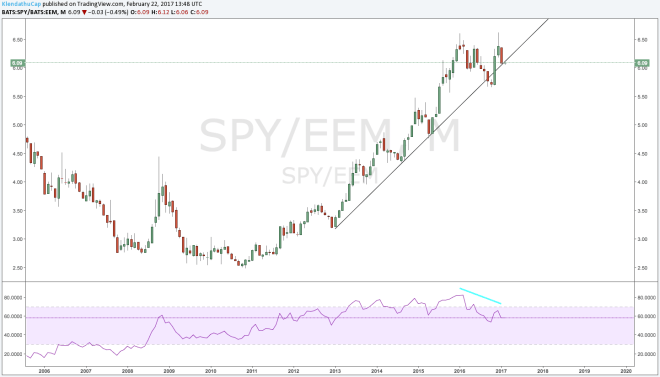
And perhaps this is why EM is behaving so bullishly. If the dollar falls, EM could really rally further. This is further reflected in the momentum divergence in SPY/EEM. We’ve also broken the 4+ year trendline. This is something to watch going forward.

screen-shot-2017-02-22-at-5-48-00-am

I will caution this last statement with the fact that the reflation trade has thus far been a dollar positive story. As inflation rose, so too have interest rates in the US, which is the only large DM economy that is not undergoing some massive form of QE. This interest rate spread drove dollar strength against other DM countries as well as some EM countries (albeit initially).

We’ve seen currency strength out of places like Mexico, Turkey, South Africa, China, Chile, Brasil and quite a few others. Could the dollar strength be a DM only story going forward?  Gold mining companies have begun to prepare for such an event and have liquidated the majority of their RECORD short position.


DISCLAIMER: This blog is the diary of a twenty something millennial who has never stepped foot inside a wall street bank. He has not taken an economic or business course since high school (for which he is immensely proud of) and has been long gold since 2012 (which he is not so proud of). In short his opinions and experiences make him uniquely unqualified to give advice. This blog post is NOT advice to buy or sell securities. He may have positions in the aforementioned trades/securities. He may change his opinion the instant the post is published. In short, what follows is pure fiction based loosely in the reality of the ever shifting narrative of the markets. These posts are meant for enjoyment and self reflection and nothing else. So ENJOY and REFLECT! 


Bitcoin: The Rising Tide Pressures The Biggest Leak

Bitcoin: The Rising Tide Pressures The Biggest Leak

China is the most interesting country both east and west of the Mississippi. Beijing is trying to have its cake and eat it too. It would like to pump as much credit as necessary to keep the economy running, while attempting to divert money to its sectors of choice. It can’t do this without a closed capital account, and although the account has been on the margin more closed off than previously, it is still by no means a steel trap.

The Chinese could learn an important lesson from the latest debacle in American infrastructure.

On the ground level it may seem like China has a closed capital account. The dam’s walls reach through the thick clouds of smog and must surely continue to infinity. Of course we know this is not to be true. The height of the walls, although unseen, is actually quite limited.

As China continues to pump credit into the system, the water level will continue to rise. In this case, the bubbles will grow bigger and bigger. Prices we find ridiculously high today, could get even more absurd. The rise in commodities, housing prices although under pressure for Chinese authorities could continue to rise as well.

The stock market which everyone believes left for dead, may rise from its shallow grave and roar like never before. Pension funds will begin allocating additional holdings to the stock market as soon as this week. This is pretty serious development. The last thing Beijing wants to do, is torpedo the pensions of millions of workers. On the back of this move, Chinese authorities have cut equity margin requirements from 40% to 20%.

Apart from another bubble in Chinese stocks, I think there’s an interesting plan here to push equity prices higher and then swap debt for the inflated equity prices. Whether or not this is the ultimate goal, it will be something to watch going forward.

And of course as these bubbles rise through the clouds and come out the other side they will be within reach of the wall’s towering heights. And once again, despite patching up most of the leaks in the dam, China will find itself in the midst of a capital outflow dilemma.

But before the water level reaches the wall’s towering heights, the pressure on the few remaining leaks in the walls will continue to build. The leak of my particular curiosity is bitcoin. Despite the Chinese Authorities trying the darndest to clamp down on bitcoin in China, the price has continued to rise.

In short, as the one of the few remaining pressure valves left to Chinese capital flight, this currency/commodity should continue to benefit immensely from the recent shift in Chinese policy to a more closed capital account and rising credit levels.


DISCLAIMER: This blog is the diary of a twenty something hedge fund manager who has never stepped foot inside a wall street bank. He has not taken an economic or business course since high school (for which he is immensely proud of) and has been long gold since 2012 (which he is not so proud of). In short his opinions and experiences make him uniquely unqualified to give advice. This blog post is NOT advice to buy or sell securities. He may have positions in the aforementioned trades/securities. He may change his opinion the instant the post is published. In short, what follows is pure fiction based loosely in the reality of the ever shifting narrative of the markets. These posts are meant for enjoyment and self reflection and nothing else. So ENJOY and REFLECT! 
 

Trump’s First Stock Market Correction: Coming Soon?

Trump’s First Stock Market Correction: Coming Soon?

“First they came for the Socialists, and I did not speak out—
Because I was not a Socialist.

Then they came for the Trade Unionists, and I did not speak out—
Because I was not a Trade Unionist.

Then they came for the Jews, and I did not speak out—
Because I was not a Jew.

Then they came for me—and there was no one left to speak for me.”

The US stock market, like the man in Pastor Martin Niemöller’s poem has ignored the continued absence of all the drivers which have pushed it higher. One by one the Trump rally dominos have continued to fall.

First the market turned for China.

Given my belief that Chinese economic activity is the largest driver of the global reflation trade, it is important to note that some of the indicators coming out of China turned long before Trump was elected. The PBOC began tightening in August of 2016. Shortly after, M1 Growth YoY turned down.

Screen Shot 2017-02-08 at 10.16.33 AM.png

The impact of this tightening bias from China’s central bank has continued to impact bond yields which have continue to hit multi-year highs.

Then the market turned for US treasuries.

“Accelerating” inflation and rising US growth was supposed to have marked the end of the bond bull market…

And yet the US 10 year peaked in mid-December.

Screen Shot 2017-02-08 at 9.52.29 AM.png

Meanwhile the 30 year never broke out of its range to begin with.

Screen Shot 2017-02-08 at 10.40.36 AM.png

Then the market turned for gold.

But who cares about the yellow metal? Investor fears are shifting from accelerating growth to stagflation, or are worried of the implications of rising populism around the world, particularly in the EU.

Soon the market will turn for stocks, and there will be no one left to hold them up…

Screen Shot 2017-02-08 at 12.01.09 PM.png

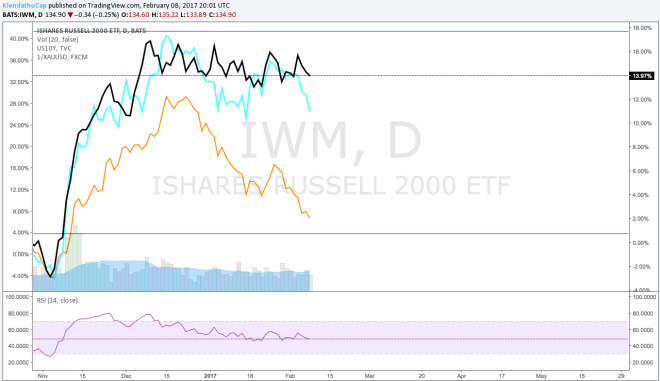
Russell 2000 (black),  US 10year (teal), Inverse of Gold (orange)


EXCEPT the euphoric levels of sentiment and positioning.

The only thing left holding up the US stock market at the moment is the narrative, which I think is in danger of a rather dramatic adjustment.

Screen Shot 2017-02-06 at 4.40.11 PM.png

Let me be clear, I am not calling for the end of the US equity bull market… yet. Simply that I believe the odds of a correction in the US stock market to be quite high over the next two to three months. I’m not loading up the boat this instant, but I am now keenly looking to add to a short position over the next month.


Disclosure: The Klendathu Capitalist is short IWM. This blog post is not advice to buy or sell securities. The author is simply informing you of his thought process in hopes that both the author and the reader will learn from his mistakes.


Euro vs Dollar: Ecks vs Sever

Euro vs Dollar: Ecks vs Sever


Ecks vs. Sever is an American-German film. It’s also one of the worst “films” of all time. I saw it when I was a boy and to be honest, I don’t remember the plot but the dueling spy film financed by Germans and Americans with the tagline “Your most dangerous enemies are the friends you’ve double-crossed” feels relevant to the tectonic shifts echoing back and forth across the Atlantic…


When I don’t know what to write about, I find myself looking at charts for inspiration. Given the one man nature of my operation, there’s always an interesting chart that I have overlooked, and this process of reviewing charts always leads to a revelation or two. The target of today’s conversation, is the Euro, but be warned, there’s a fair bit of geopolitical analysis in this piece.

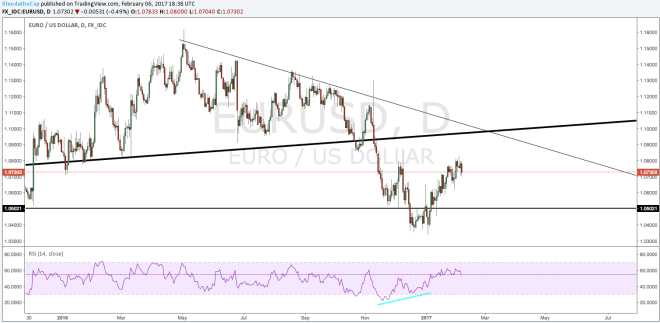
We have a broken 20 year trend-line. We’ll get to that interesting momentum divergence later…

EURUSDmon.png

A temporary bounce off at 12 year trend-line.

Screen Shot 2017-02-04 at 2.59.35 PM.png

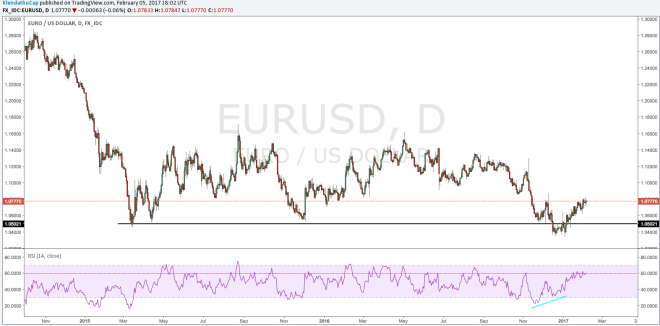
As well as a strong line of support around 1.05 with positive divergence in RSI momentum.

Screen Shot 2017-02-05 at 10.02.54 AM.png

Add it all up and what do you get?

Back in December, I went tactically long on the Euro versus the Dollar. At the time my thought process was that sentiment was overly bearish (I could practically hear the screams for EUR/USD parity from my brother’s house in the mountains of Idaho). And despite years of record capital outflows, the Euro refused to break to parity.

Important to note that we’ve already begun to see a reversal in these capital flows. From the WSJ:

“Investors in the eurozone, for which data is more delayed, sold €15.99 billion ($17.2 billion) more in foreign bonds than they bought in the three months through November, becoming net sellers for the first time since 2012.”

Screen Shot 2017-02-05 at 9.15.13 AM.png

As shown earlier, the technical back drop was also compelling, at least from a short term perspective. RSI momentum had turned bullish, while the Euro refused to make a significant new low.

screen-shot-2016-12-13-at-6-08-42-am

Most importantly, inflation was finally on the rise and I thought that the monolithically slow ECB would be forced to taper faster than current market expectations. From Another Head Fake: Why The Euro Is Headed Higher:

“Imagine inflation hitting 1.5% over the next few months with an accelerating trajectory. In spite of the ECB’s QE, long term rates could begin to rise, and we would start to hear rumblings of a potentially accelerated taper out of the ECB further pushing rates European sovereign rates higher.”

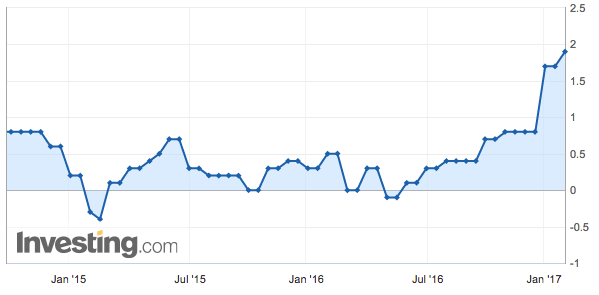
Turns out, I was wrong. Inflation in Germany accelerated to 1.9% in January.

Screen Shot 2017-02-05 at 8.26.52 AM.png

German CPI (YoY)

Luckily I was generally right, rather than precisely wrong like Draghi was.

Meanwhile, as of writing this article, the 10 year German Bund is offering a paltry 41 basis points of yield. Inflation has gone too far, forcing a stern response from German Finance Minister Schauble. From the FT:

“The euro exchange rate is, strictly speaking, too low for the German economy’s competitive position,” he told Tagesspiegel. “When ECB chief Mario Draghi embarked on the expansive monetary policy, I told him he would drive up Germany’s export surplus . . . I promised then not to publicly criticise this [policy] course. But then I don’t want to be criticised for the consequences of this policy.”

So to me, it seems the ECB has some ‘splaining to do. They have to sell NIRP to those “poor” German savers who are fighting 2% inflation. Clearly they aren’t selling it well. Support for Merkel’s Euro-centric party is waning.

Unfortunately, these are the sacrifices the northern creditor nations will have to make in order for the European project to succeed. The southern states simply owe too much debt. The only political remedy to said debt burden is devaluation through inflation and financial repression.

This puts the states of the EU at odds with one another and unfortunately this is the part where I get into some nasty geopolitical analysis, for the European Union is not an economic project but a political one. For those uninterested in my geopolitical analysis skip the following section denoted by the horizontal lines (apologies for the length):


“To combat the call of sin, ie., Resistance, the fundamentalist plunges either into action or into the study of sacred texts. He loses himself in these, much as the artist does in the process of creation. The difference is that while the one looks forward, hoping to create a better world, the other looks backward, seeking to return to a purer world from which he and all have fallen.” ~ Steven Pressfield

From the 1500’s to the dawn of the 20th century, the European nation state reigned supreme on the global stage. Through superior technology and capital pooling capabilities, these small countries were able to build empires on which the sun never set. But in the last 100 years, with the emergence of the supranational powers of the US, Russia, and most recently China, these countries have slowly faded into the background. In order to compete, the nations of Europe needed to band together, forming their own supranational organization, the European Union.

And yet, from the lens of global significance, the EU has been an unmitigated disaster. What started off as an interesting idea, quickly became a dying man’s last gasp for glory. With flattening population growth, a stagnant economy, and widening inequality, the European Union gives trashcan fires a bad name.

Already under tremendous pressure, the migrant crisis is not the final straw but the ten ton elephant that broke the camel’s back. At first these people lost their voice on the global stage. Then the bureaucrats from Brussels, took their voice in European affairs away. And now finally, they see the migrants as a threat to the last thing they have left, their national identity.

As Rahm Emanuel infamously said, “A crisis is a terrible thing to waste” and populist leaders have seized on this opportunity, promising their growing base a return to their nation’s imperialist glory (my emphasis in bold):

“The aim of this program is first of all to give France its freedom back and give the people a voice,” ~ Marine Le Penn

The people have lost their voice. They have lost their country. But now they have the opportunity to take it back. It doesn’t matter whether or not these people are good leaders they are saying all the right things to get elected. To turn the clocks back a bit and egotistically highlight a post I wrote back in November 2014 titled Desperation: Why We Will Continue To Elect Awful Leaders:

“The point is that it has become exceedingly obvious that politicians no longer have to be good at their job to get elected. They can skate by on big promises, grand statements, and “not doing stupid shit”. Of course these are terrible qualities to have in any human being let alone an elected official…”

This was the Trump playbook. Recall Trump’s main goal for the presidential debates was to not come off as an insane ego-maniac, while along the way promising everyone something: the resurgence of coal to West Virginia and Pennsylvania, the border taxes on foreign imports to the midwest, the repeal of Obamacare while maintaining coverage for all, etc… etc… And now like a New England Patriots coach, the populist candidates of Europe have stolen his playbook. The following is an excerpt from Reuters (my emphasis in bold) describing Le Pen’s “manifesto”:

“It says a generous policy of tax cuts and welfare increases would be made possible by fighting social security fraud, tax evasion and changing tack on the EU and migration, but without explaining how that would be done.

Tax cuts, increased welfare, no migrants, oh my! What a plan! How can anyone compete? Seriously? No explanation? Who cares! It all sounds so fantastic. Let’s have our cake and eat it too!

Status quo politicians cannot hope to promise as much as these rising right wing candidates can simply because the public has little to no trust in them. The status quo has failed to deliver on their campaign promises for decades as the middle class in developed economies has slowly been hollowed out. Most people in the US saw through Hillary’s phony promises in a heart beat, but Trump, they gave him the benefit of the doubt.

And in case you had any doubt, on the public’s level of trust in the status quo politicians versus these populists politicians, look no further than the French election. Francis Fillon who is arguably the best candidate (from an economics perspective) has been accused and will likely be indicted on charges of graft and misuse of state funds. From the NY Times:

“Mr. Fillon’s campaign was thrown into turmoil last week after Le Canard Enchaîné, a weekly newspaper that mixes satire and investigations, reported that his wife, Penelope Fillon, was paid with taxpayer money for a bogus job as a parliamentary assistant to her husband and his deputy in the National Assembly, the lower house of Parliament.”

Interestingly enough, Le Pen is under investigation for THE EXACT SAME BEHAVIOR and yet no one gives a shit. From the same NY Times article:

“Ms. Le Pen is facing her own allegations of financial misconduct at the European Parliament, where her party is accused of paying its staff members with European Union funds, which can only be used for parliamentary aides. Ms. Le Pen is refusing to repay the €300,000 that the European Parliament is seeking to recover.”

So once again, I must ask how are the status quo politicians supposed to compete with candidates who can promise the moon while simultaneously getting away with political suicide?

Given everything I’ve said, I believe the odds are quite high for a right wing nationalist to win a major election this year, whether it be the Dutch in March, the French in May, or the Italians in the summer.  If just one of these dominos falls it could set off a chain reaction leading to the break up of the EU.


BACK TO MACRO (sort of)!

I believe the geopolitical risk I have outlined has begun to be reflected in the breakage of the 20 year upward trend-line.

EURUSDmon.png

So despite the positive momentum divergence, I do not expect this to be an important bottom that will give way to another sustainable push higher in the Euro. Like my previous post said, I believe this move to be a #HeadFake.

But given the inflationary pressures there’s still room for rates in the EU to push higher before their economies start to suffer from any tightening. Recall that interest rates were sub 1% out to 20 years in some EU states.

On top of being trapped in the same deflationary spiral the rest of the world finds itself in, the EU has been dealing with a series of rolling crises that has not allowed these economies to build any sort of momentum that would lead to significant investment. In short the European economies are starving for more investment. Higher rates will spur the banks to lend and that investment because of the prolonged drought will have outsized effects.

Unfortunately, the same cannot be said about the US, which has been growing somewhat consistently since the GFC. Perhaps more importantly, the US, despite what Trump says, does not suffer from a lack of capital investment.

https://twitter.com/Valuetrap13/status/828319139378892800

https://twitter.com/Valuetrap13/status/828320124088225797

Screen Shot 2017-02-05 at 11.50.07 AM.png


So far, the only thing higher US rates have achieved (other than rising bank stock prices and a stronger dollar) is a tightening of financial conditions for the US consumer who has been struggling under a massive debt burden.

It won’t be long till the other more connected sectors such as the auto or housing sectors feel their wrath. While Europe will benefit from rising rates, the US will not. And because rates pushed higher in the US first, the US has already begun to feel these negative effects. I expect this divergence to continue further compressing the spread between US and German interest rates, which is the major driver of the Euro versus the Dollar.

But despite my bullish short term disposition on the EUR/USD, there still remains quite a bit of overhead resistance. The thick bold line, is the 20 year trend-line. We could break above it temporarily, as nothing is set in stone, but in the end, given the geopolitics of the situation, it won’t be long till we see the Euro go much much lower.

Screen Shot 2017-02-06 at 10.38.16 AM.png


The Reflation Trade

The Reflation Trade

Dear Reader,

I wrote this post a few weeks ago, while on vacation but for a number of reasons I delayed posting it. If you’ve been keeping up with my posts, you’ll have already read a good portion of what follows. But what I think I’ve done here, is distilled the essence of what I believe is the reflation trade and (now that base effects are set to peak next month) its possible drivers going forward. Once again, at the very least, I hope you find this as stimulating to read as I did to write.

Cheers!


While my grandfather was working for the Institute for Defense Analysis during the 1970’s he developed an algorithm to break Russian codes.  It was quite successful and would go on to be applied to a number of important areas including the solar cycle. At the time, it was widely believed that there was an 11-year cycle that drove solar activity. But an article published in 2015 titled “Irregular heartbeat of the Sun driven by double dynamo” asserts that there is a second cycle or dynamo that drives solar activity. The authors go far as to predict these two dynamos would counteract each other in the 2030’s producing a cooling period that hasn’t been seen in over 400 years.

“The model draws on dynamo effects in two layers of the Sun, one close to the surface and one deep within its convection zone. Predictions from the model suggest that solar activity will fall by 60 percent during the 2030s to conditions last seen during the ‘mini ice age’ that began in 1645”

The analogies to the current climate of the global economy should not go overlooked. If the demographers and history are any guide, we are at the end of a debt super cycle, arguably the largest in history. When it ends, we too will enter a cooling period. With the emergence of China in the 21st century, the global economy finds itself driven by a pair of dynamos.

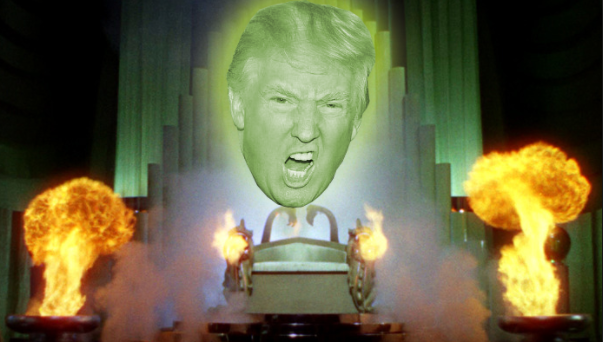
But investors have become so accustomed to the US driving the global credit cycle that they have missed the origin of the reflation trade. The dollar, commodities and inflation have all risen together for the first time in over a decade which has left investors scrambling for a narrative to explain this paradox. Fortunately, the recent US presidential election has provided just that. Despite the “coincidence” of commodities bottoming with China’s economy in February of last year, investors have latched on whole heartily to the “Trumpflation” narrative. Or to use another analogy, investors have entered the Jade City, but they have become distracted by the Giant Green Floating Head.

screen-shot-2017-01-16-at-12-33-17-pm

Unbeknownst to investors, China is behind the curtain pulling the strings. And if we continue with the analogy, I guess my pulling back of the curtain makes me Toto.

toto

Although I’d hardly be the first to do so. CrossBorder capital and others have been trying to tell investors for months that this was the case. But unlike them, I am not a China bull. I am in the “China is a massive bubble” camp. The reflation trade, being yet another extension of said bubble, will eventually die out. Sooner rather than later I will argue. But before I do, let’s go back and look at the mood around the start of the reflation trade.

In the depths of the January 2016 sell off oil had plunged to $26, the trade weighted dollar hit a multi-decade high and most importantly, consensus believed China’s economy to be headed for a hard landing. Not to pick on Kyle Bass, but his February 2016 letter hit the proverbial nail on the head (my emphasis):

As it is obvious that China’s economy is slowing and loan losses are mounting, the primary question is what are China’s policy options to fix the current situation?”


toto

Yes, it was obvious. Looking up at the chart, industrial profits and sales had turned negative. Everyone knows you can’t service a growing debt burden on negative profits, just like everyone knows that China has an enormous debt bubble.

toto

But unlike the 2008 financial crisis when the central authorities, the Federal Reserve and US treasury, were completely oblivious to the actual problems, the Chinese authorities, and everyone else for that matter, knew exactly what the problems were. What Kyle Bass and others (myself included) missed was that the Chinese authorities were planning a Battle of the Bulge type counter attack in the form of a massive stimulus push.

toto

For those in need of a quick history lesson, in the winter of 1944, the Germans were trapped. Fighting a war on multiple fronts with dwindling resources it was obvious they would lose the war (sound familiar?). And because it was “so obvious” that Germany was going to lose, the Allies let down their guard and were caught flatfooted when Germany launched one of the largest counterattacks in human history. From Wikipedia:

“American forces bore the brunt of the attack and incurred their highest casualties of any operation during the war.”

History is not without a sense of irony, as western hedge funds and speculators have had their shorts knocked off them as this reflationary trade has gone further and farther than the bears could have possibly imagined. Throwing salt in the wound, the lynch pin of the Chinese economy, State Owned Enterprises (SOEs), have roared back to life with profit growth turning positive for the first time in over two years.

toto

But it would be foolish to think this stimulus is one, sustainable and two, without its costs. The Yuan took this reflationary policy on the chin. Despite spending $320B in reserves to defend the Yuan in 2016 it still fell 6.5% against the dollar. And even though China’s economy bottomed in Q1 2016, it still took months before the country stopped exporting deflation to the rest of the world.

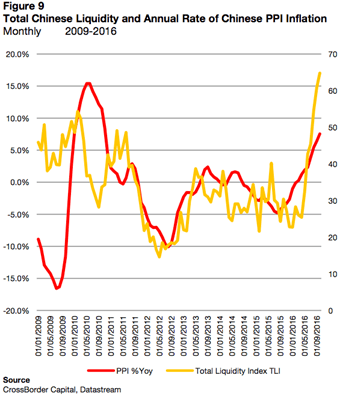
More importantly, since China had been exporting deflation for so long, the market became convinced that deflation would continue in perpetuity. I think we all remember the panic last summer to reach for anything with a positive carry. What the market and more importantly Central Bankers were missing was the fact that deflation in China had in fact bottomed, and although still negative, was rising sharply.

                                               Chinese PPI
toto

This turn from deflation to inflation also fooled Chinese investors who piled into the record low bond yields. In fact, investors’ response to these rising inflationary pressures was so slow that yields in China did not bottom until PPI had already turned positive for the first time in over 4 years!

Toto.png
And this is where things get very tricky for the Chinese authorities. They wanted this inflation. Just not this quickly. Locked in a deflationary debt spiral, a little inflation is a gift from the financial gods…

And we’ve actually seen the US, EU and Japanese economies all respond positively to these rising inflationary pressures. The combined strength of the three large economies all rising together may even be able to hold China’s slowing economy for a bit longer (we’ll get to that bit later).

Toto.png

…BUT in China where the bond bubble is so intertwined and over levered that a mid-size brokerage firm can’t even default on some of its debt obligations without causing a major panic, rising rates are down right catastrophic. In the depths of China’s December bond panic, a “multi-billionaire defaulted” on just $13 million worth of bonds. I use quotes, because anyone can be a billionaire if they borrow a few billion dollars and ignore the liability side of their balance sheet.

Toto.png

I doubt he’s the only one swimming naked. Wealth management products (WMPs) are incredibly susceptible to rising interest rates. These Ponzi-finance vehicles have increasingly invested in each other which has pushed counter party risk exponentially higher. From WSJ:

“Some 40% of the assets in wealth management products—the biggest portion—was invested in bonds as of the first half of this year, up from 29% in 2015, according to Moody’s Investors Service.”

This inter-connectivity of WMPs has further restrained the PBOC’s ability to tighten. In spite of rising inflation, if the PBOC wanted to keep the economy going they would have to inject more liquidity… and that is exactly what they did. From WSJ (my emphasis in bold):

“On Friday [December 16th], the PBOC tapped an emergency lending facility it created in 2014 to extend 394 billion yuan ($56.7 billion) in six-month and one-year loans to 19 banks. That pushes the net amount extended through the facility to 721.5 billion yuan so far in December, a monthly record, according to Beijing-based research firm NSBO.”

The Chinese government finds itself in a constant battle against short term destabilizing forces. Every time it tries to take its foot off the gas, the economy gets pulled into the deflationary whirlpool, Charybdis, prompting even more Cow Bell. I’m mixing metaphors but you get the point.

On the other hand, they can no longer stimulate as much as they want or else they’ll face, Scylla, the nine-headed inflation monster that will rip their debt to shreds. It is quite likely that China has now reached the point where stimulus’ effect on the economy over the medium term is net negative.

More specifically, artificial increases in credit pushes inflation higher which in turn pushes up interest rates which in turn tightens liquidity thereby defeating the purpose of stimulating in the first place. My guess is that the recent monthly record of stimulus injections will show up in the inflation data much sooner than the Chinese authorities would like.

And although we have not yet seen rip roaring inflation, China has gone from DEEP deflation to rising inflation within twelve short months. The Chinese Authorities are clearly aware of this shift, but it’s unlikely that they acted fast enough. The PBOC did not start tightening liquidity until a month before PPI turned positive.

Toto.png

It needs to be said, that by comparison, the PBOC is light years ahead of their developed market counter parts. The BOJ in particular pinned bond yields to the floor the same month that Chinese PPI had turned positive for the first time in over four years! But we’ll get to this monumental mistake later (actually we won’t, sorry). For now, let’s place our focus back on China, the epicenter of the reflation trade. If Total Chinese Liquidity is an accurate indicator, Chinese PPI could continue higher for the next few months.

Toto.png

With that said, increases in liquidity have lost effectiveness on the Chinese economy over time.

Toto.png

For those that do not know, the Li Keqiang index is a combination of railway cargo volume, electricity consumption and loans disbursed by banks. Considering Chinese bank loans hit a new record in 2016, and enough electricity (produced via coal) was consumed to blanket North Eastern China in smog for the past few weeks, it is safe to say that this trick is unlikely to be played again. The Chinese Government’s pivot towards stability over all else further supports this thesis. From Bloomberg (emphasis is mine):

“The price was too high, the leaders agreed, according to a person familiar with the situation. The buildup of debt used to fuel smokestack industries from steel to cement had helped win the short-term battle for growth, but the triumph itself undermined the foundations of long-term expansion, the leaders decided, according to the person, who asked not to be named because the meeting was private.

What followed was an order to central and local government officials that if they are forced to choose this year, stability must be the priority while everything else, including the growth target and economic reform, is secondary, said another four people familiar with the situation.”

The prioritization of stability over growth is not exactly music to the ear of an investor who put money into China on the hopes of +7% GDP growth and a stable currency. Which begs the question, how do you maintain stability while at the same time growing your debt fueled economy without it tipping over? Given China’s shadow banking risks, rising inflation, and dwindling FX reserves the simple answer is you can’t. Like riding a bicycle, the closer your speed approaches zero the harder it is to balance.

In China’s case, they are riding a bicycle while spinning half a dozen plates of uranium while juggling a pair of Molotov cocktails. If they slow down too much, they will not only crash, they will explode. Given said conundrum, it will be interesting to see how the local governments interpret this seemingly contradictory directive of stability over growth. If the PBOC is any indicator, we are about to witness some very odd behavior coming out of the Chinese Authorities.

Taking the lunacy a step further, the PBOC cut the RRR for the 5 largest banks, and injected a even more liquidity just a week later…

Before ordering banks to curb new loans.

From Bloomberg:

“China’s central bank has ordered the nation’s lenders to strictly control new loans in the first quarter of the year, people familiar with the matter said, in another move to curb excess leverage in the financial system.”

Given the recent price action of iron ore, when it comes to China, we should always expect the unexpected.

Because clearly iron ore is in short supply in China…

Perhaps demand is set to sky rocket as China seeks to further build out OBOR projects as well as domestic projects…

Or perhaps, investors are panicking about what to do with their falling currency and are trying to hedge it. There’s a certain level of irony (pun intended… I’ll wait) that the largest source of instability in China comes from a “pegged” currency. It seems self-evident that China’s pivot towards stability would include a stable currency but given the rising inflation, slower growth pivot, dwindling reserves and lack of defensive options, one wonders just how long they can support the Yuan.

A falling Yuan is the worst thing that could happen for the Chinese Authorities. For one it undermines their credibility. Secondly, it forces the PBOC to intervene and drain liquidity from the market. And finally, it pushes inflation higher as the value of imported commodities and goods rises. With that said, recall that the Chinese bond market is a massive intertwined web of hidden risk, and in a falling liquidity and rising inflationary environment it will get butchered worse than the younglings in Star Wars Episode 3: Revenge of the Sith.

screen-shot-2017-01-10-at-12-34-36-pm

Getting back to Kyle Bass’s letter, it’s important to note the key role both Wealth Management Products (WMPs) and Trust Beneficiary Rights (TBRs) play in the Chinese Banking System. As the sticky systemic glue that binds the over-levered Chinese banking system together, they will be the focal point of any meltdown. From Kyle Bass’s letter (my emphasis):

TBRs are one of the biggest ticking time bombs in the Chinese banking system because they have been used to hide loan losses. The table below illustrates how pervasive TBRs are throughout the Chinese banking system. One can make many assumptions regarding the collectability of such loans, but our takeaway is that the system is already full of massive losses. Pay particular attention to the column of the ratio of TBR’s to loans on each bank’s books.”

screen-shot-2017-01-10-at-4-21-10-pm

We saw just how potent TBRs can be when Sealand Securities, a midsize brokerage firm, suggested it would default on loan contracts due to a “fake seal”… or as I used to say in elementary school, “my dog ate my homework”, although honest to God, one time it did, so maybe we should give Sealand Securities the benefit of the doubt.

Although, the Chinese bond market certainly didn’t. Bond values plunged and the PBOC was forced to inject $23.7B of liquidity in one day. By the end of the month, the PBOC injected a record $120B in liquidity. Recall, this all came against the backdrop of the highest SOE profit growth in over 3 years! It didn’t matter that the underlying fundamentals of the debt had improved (albeit temporarily), the bond market still cracked! This episode appears to have spooked investor appetite for corporate debt as well.

So, if the situation is this bad that not even a medium size company can default on its TBRs without sparking a major panic, then how are the authorities supposed to “maintain stability” without pumping more liquidity into the system? And how can they pump liquidity and credit into the system without pushing down the Yuan?  And how can they maintain stability if the currency is falling?

You see where I’m going with this. It’s not difficult. I don’t believe and I certainly don’t claim to have any unique insights. If there’s anything that I do possess whether right or wrong is a high conviction level which allows me to see through all the smoke screens put up by the Chinese Authorities. And yet one only needs look at investor positioning to see that they have fallen hook line and sinker for these very smoke screens! The shift is simply astounding.

In less than a year Copper positioning has gone from record short to record long.

Toto.png

Net US 10-year bond positioning is at an all-time low.

And of course, oil positioning is back where it was in 2014, right before it fell over 70%.

NYSE short interest has also plummeted back to 2014 levels.

And for the cherry on top, the “world’s most bearish hedge fund” has begun to pare back its short book.

This is despite what the CIO, Russel Clark, believes is a dream set up for a potential China crisis (Zerohedge’s emphasis).

“I have been able to play into market trends that would also do well in a China crisis. But suddenly, with the election of Trump, the broader market trends are all the opposite of how you want to be positioned in a China crisis. Higher commodity prices, higher US yields, and cyclicals over staples. One answer would be to go to cash and wait it out. The problem with this is that, if you believe that a Chinese crisis is inevitable then what would be the signals to begin to put on a China crisis trade? The answer would be capital flight from China, rising Chinese yuan deposit rates in HK (as this is a commercial rate, not set by the PBOC), and increasing market talk of capital controls. Unfortunately, these are all happening today.”

Sentiment and positioning aside, I do believe there is a good chance for the reflation trade to continue a bit further. Recall that both China’s economy and the oil price bottomed in February of last year (Coincidence?). From base effects alone these two factors should provide an inflationary tailwind over the next month or so. Given renewed developed market economy strength as well as the market’s slow reaction function (see summer bond buying panic months after deflation had bottomed) the reflationary trade could continue for an additional few months after inflationary pressures from oil and China peak in Q1 of this year.

Adding to that, I do believe there is some room over the next month for China and the Yuan to surprise to the upside. The Chinese Authorities have done a relatively good job shifting the narrative these past few weeks. Although I’d say hiking HIBOR to 105% reeks of desperation, it’s not my opinion that drives markets (if only).

I also see incredible potential for the PBOC to defend the psychologically important $3T reserve level this month. Come the release in early February, the market may be shocked to discover that the $3T reserve level has held. The Yuan could strengthen and the narrative would temporarily shift to the masterful job done by the Chinese Authorities, and developed markets would rally on the back of higher inflation.

Remember, since China is the source of the rising inflation, a stronger currency only amplifies this effect. Higher inflation in the US would push interest rates higher, strengthening the dollar and further accelerating capital flight out of China. So, by defending the currency, China is actually reinforcing the pressures that forced its defense in the first place. And of course, all of this would ignore how the PBOC might manage to hold the line in the first place. From Bloomberg:

“Financial regulators have already encouraged some state-owned enterprises to sell foreign currency and may order them to temporarily convert some holdings into yuan under the current account if necessary, they added.”

The Chinese Authorities, lauded for their long-term planning, are actually some of the best short term fixers the world has ever seen. Their ability to pull any and every lever necessary to kick the can down the road is as impressive as it is myopic. Sadly, the game, now in quintuple overtime, is almost over. The players are about to drop dead from exhaustion and this is the part where I agree 100% with Kyle Bass:

“Once analysts, politicians, and investors alike realize the sheer size of the impending losses and how they compare to the current levels of reserves, all focus will swing to the banking system.

As it is obvious that China’s economy is slowing and loan losses are mounting, the primary question is what are China’s policy options to fix the current situation? We believe that a spike in unemployment, accelerated banking losses / a credit contraction, an old-fashioned bank run, or more likely the fear of one or all of these events, will force Chinese authorities to act decisively.”

Given investor sentiment and positioning it is quite clear that China has “control” of the narrative for now. But we’ve seen how quickly that narrative can turn, and once again to use the Battle of the Bulge analogy it is important to remember just how quickly Germany folded after the battle ended.  The following is an account from a German tank commander who fought in the battle:

The Führer has asked us to do our very best and not to let him down. We only need to keep the enemy at bay for about three more months “. Three more months, then we would see the new miracle weapons and these would force the enemy to negotiate. I believed that.”

Once again the parallels to modern China are eerily similar. With the pivot towards stability, the Chinese Authorities are desperately trying to make it to the government reshuffle. Just nine more months! Nine more months and the miracle weapons, I mean Xi Jinping will have all the power he needs to manage the economy! Of course, history tells us that the battle of the bulge lasted only 40 days, and despite the war lasting another four months, the German miracle weapons never materialized.

Maybe China makes it to the government shuffle (and they probably will), but I fail to see how higher debt levels, smaller FX reserves, and rising shadow bank risk will be any more manageable under a regime where Xi has “full” control. What separates China’s coming crisis from the US’s in 08, is that it will happen not because the authorities failed to notice the problems, but because they have exhausted all capabilities to prevent it. And perhaps most importantly what separates the next global crisis from the last, is that it will most likely not be driven by the US, but by China.


Disclaimer: This blog post is not advice to buy and or sell securities. I am merely informing you of my intentions/opinions. If you act on the words of a twenty something millennial over the internet you have only yourself to blame. 

Corrections: PBOC official reserves dropped $320B not $400B. The Yuan fell 6.5% against the dollar not 8% in 2016.